AP Payment Instruments
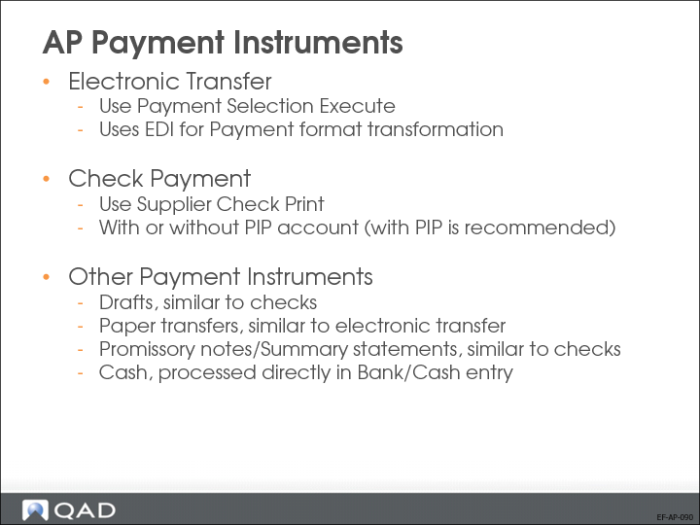
The system has a number of pre-defined payment instruments other than check or electronic payment:
• Draft
The draft or bill of exchange is a negotiable security signed and dated by its issuer (the bank). It contains an unconditional order or instruction to pay a fixed amount to the supplier on the agreed due date. Once signed, the draft is considered a collection instrument. Its form, content, and legal consequences are governed by law.
• Paper Transfer
The transfer payment instrument is an order for payment that you submit to your bank. The bank ensures that the amount is transferred to the supplier’s bank account. Transfers are in paper format.
• Promissory Notes
The promissory note is a promise to pay the supplier, instead of an unconditional payment order. The promissory note carries more risk for the beneficiary and has fewer legal consequences for the issuer if payment is defaulted summary statements: You send summary statements to the supplier. Factoring companies and banks that provide credit card services use summary statements.