Business Considerations
Overview
There are several business issues to consider before setting up QAD Enterprise Applications. This section does not discuss all potential issues, but presents some issues to generate thought and discussion.
Product Life Cycle
Definition
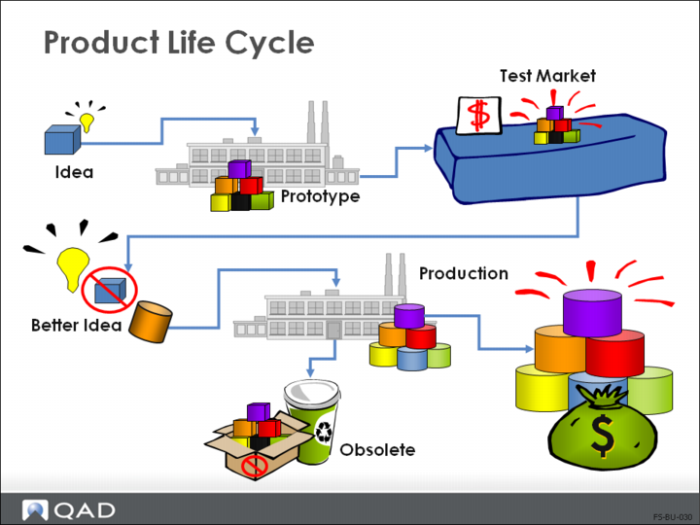
Any product goes through some form of a life cycle at the manufacturer. The product idea is conceived, designs created, manufacturing commences, and the product moves into sales and customer availability.
For many products, design changes and modifications are applied, additional manufacturing is completed, old product is retired, and new product enters sales and customer availability.
Why Consider?
• Item status can be used to manage different stages in a product life cycle; examples include:
• Prototype
• Planning
• Costing
• Active
• Phase out
• Obsolete
• The bell curve effect of product demand can be forecast different for each item status
Functionality in QAD Enterprise Applications
• Restrict forecasting based on Item Status/Life Cycle
• Use Item Status Code Maintenance (1.1.5) to set up item status codes
• Assign item status codes in the Item Master screens
Setup Implications
• History across item numbers for new life cycles, new products
• Set up item status for life cycle data
• Use Family BOM and Item Status percentages for forecasting
Forecast Consumption
Definition
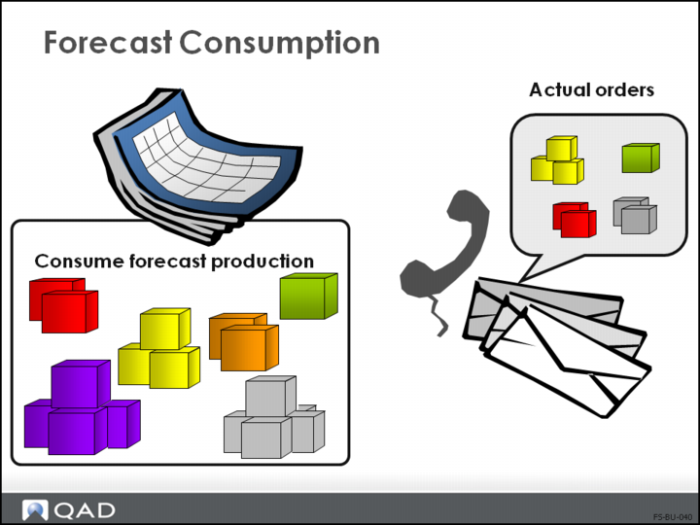
Sales Order Control (7.1.24) controls consumption. The control program can be set to consume either forward or back, and is set based on variability of sales and forecast.
Abnormal consumption is any unplanned emergency, such as when a tornado hits and the abnormal consumption of destroyed materials causes increased demand. (An abnormal sales demand is also known as outlier.)
Why Consider?
• Consumption of forecast can make QAD Enterprise Applications “nervous” – affecting how MRP drives demand for components
• Window of forecast consumption effects product availability
• Forward/back consumption and abnormal consumption can be done at the Sales Order line from Marketing
• Forecast can be based on when you get the order (booking) whereas QAD Enterprise Applications forecasting is based on due date
MRP Horizon
Definition
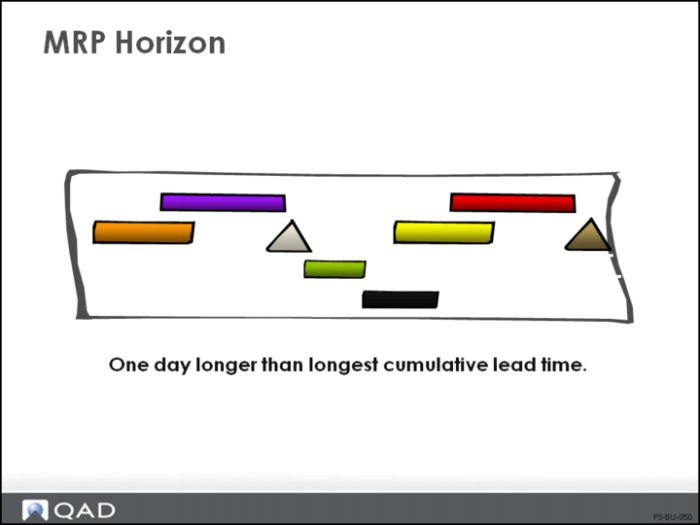
Make the Material Requirements Planning (MRP) horizon and number of days in the forecast compatible so that the values generated are meaningful. Forecast past the MRP horizon. One day longer than the longest cumulative lead time is often ideal.
Why Consider?
Forecasting and MRP data can differ significantly when horizon and forecast are not coordinated
Production Forecasts
Definition
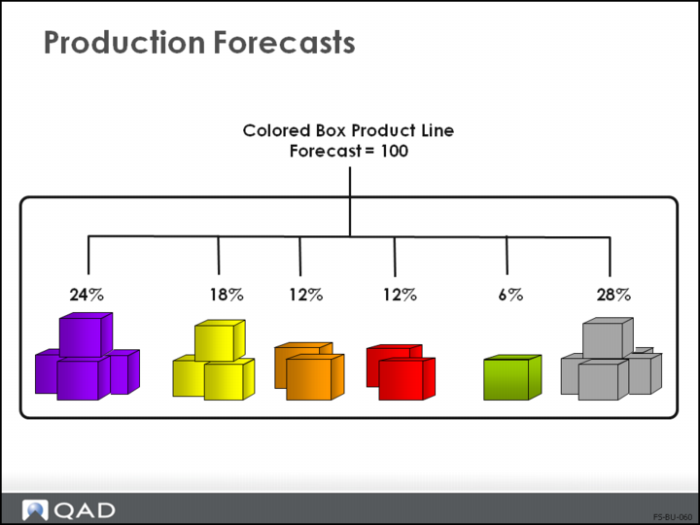
Production forecasts result from multilevel Master Scheduling (higher-level forecasts). The production forecasts work with forecast consumption (for O/P product types).
Why Consider?
• Planning structures
Functionality in QAD Enterprise Applications
• Configured products, need a percentage on the parent item for consumption
Setup Implications
• Forecasting discreet numbers at option of configure
• Have sales consume at the option level
Spare Parts
Definition
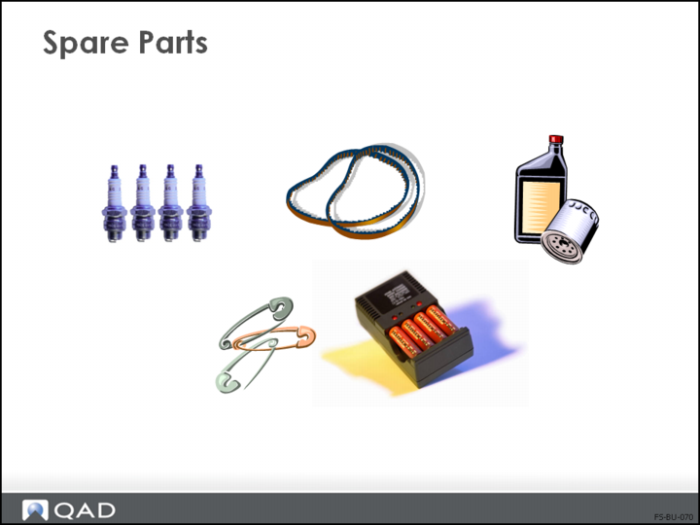
Some products can be individually sold as replacement or service parts, outside the demand of the parent assembly.
Why Consider?
• Independent forecast on spare parts
• Dependent forecast on the same item based on work orders
Multiple Sites
Definition
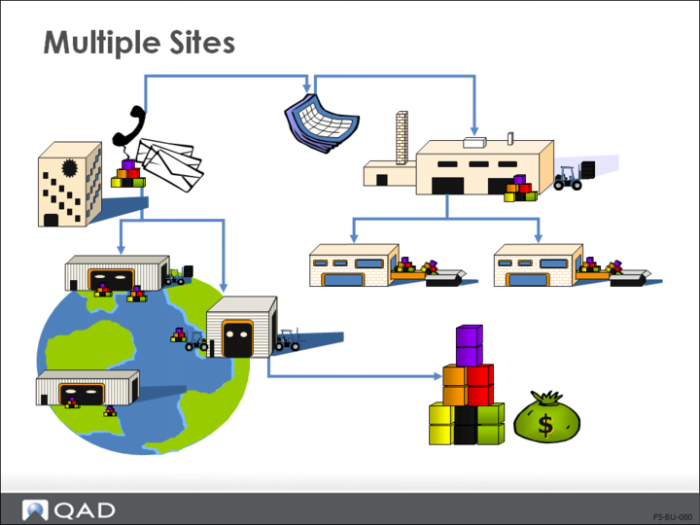
When multiple sites carry the same service part, you can change the site listed on the Sales Order line to get available parts elsewhere. However, the sales credit and forecast consumption goes to the delivering site, not the ordering site.
Why Consider?
• Sales history goes to the ordering site
• The ordering site starts stocking, or increases the stock of, the ordered part
Does the sales order header site or the line item site figure in the calculation of the forecast?
Summary