QAD Enterprise Edition Performance
Impact of Poor Performance
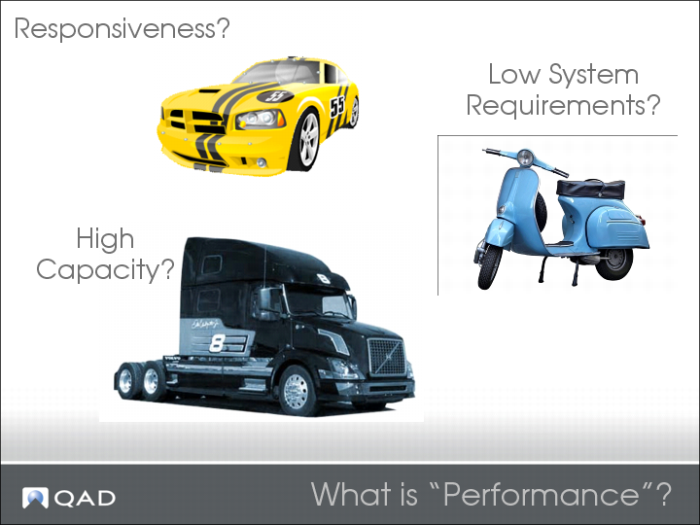
What is Performance?
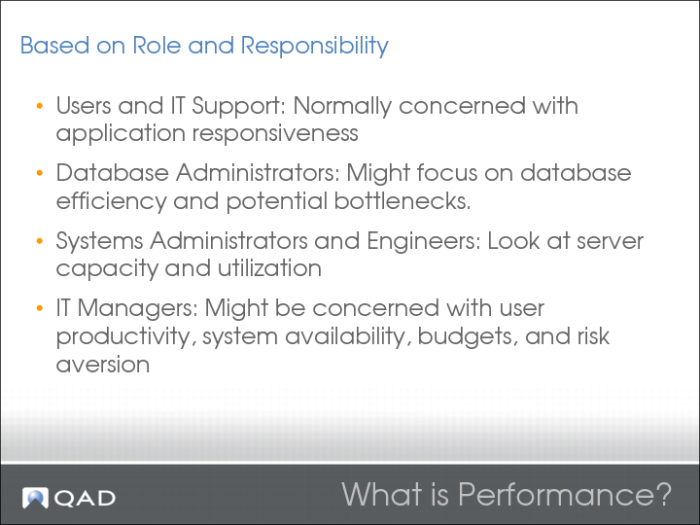
What is Performance? 2
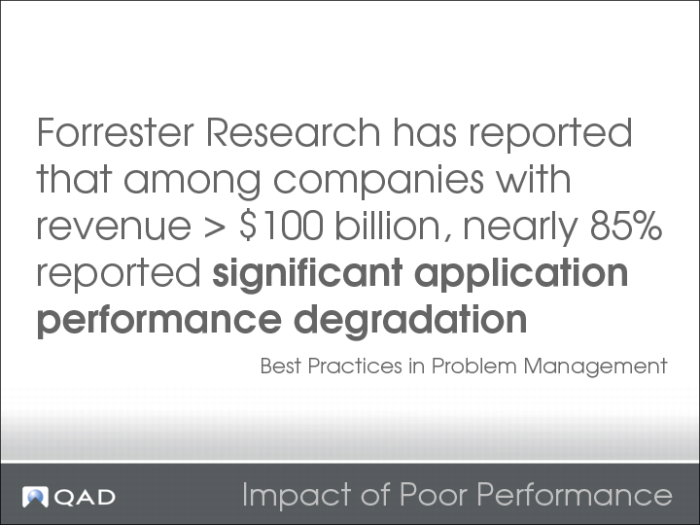
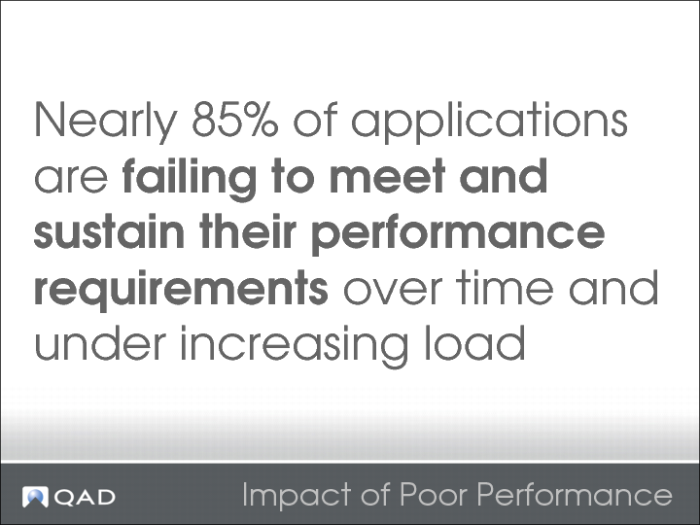
Application Performance Degradation
Application Performance
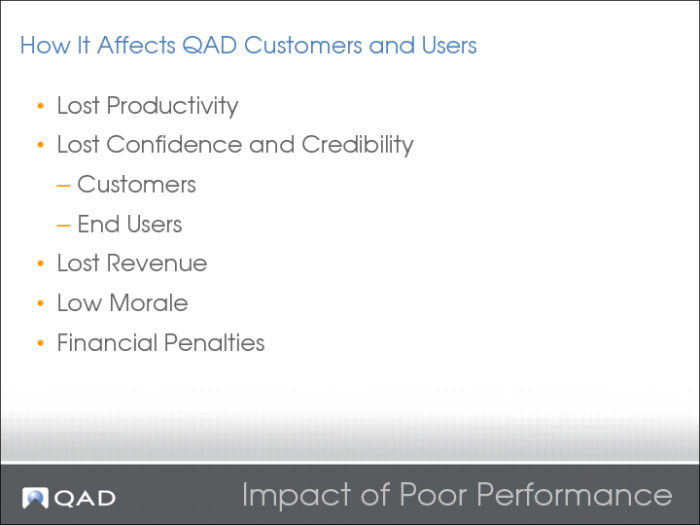
QAD Customers and Users Affected
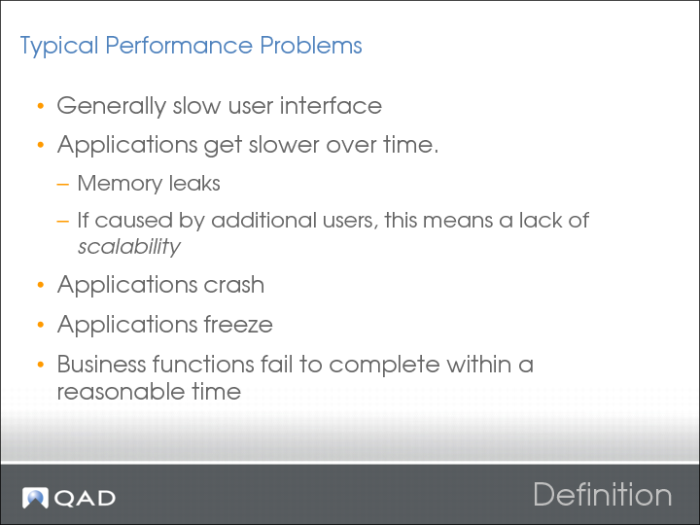
Typical Performance Problems
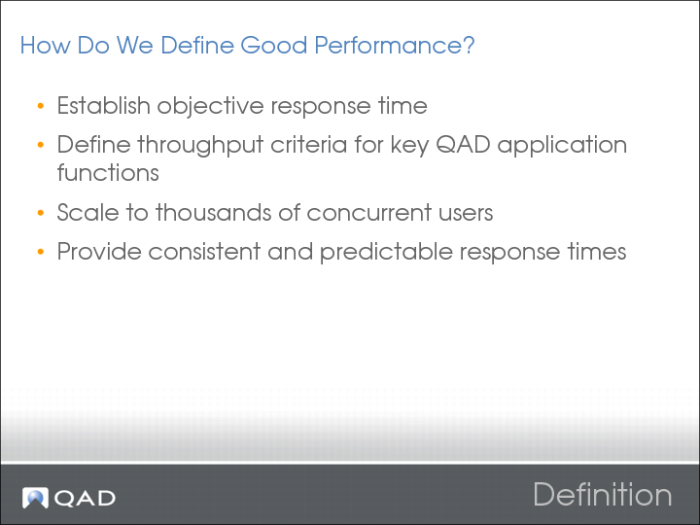
Defining Good Performance
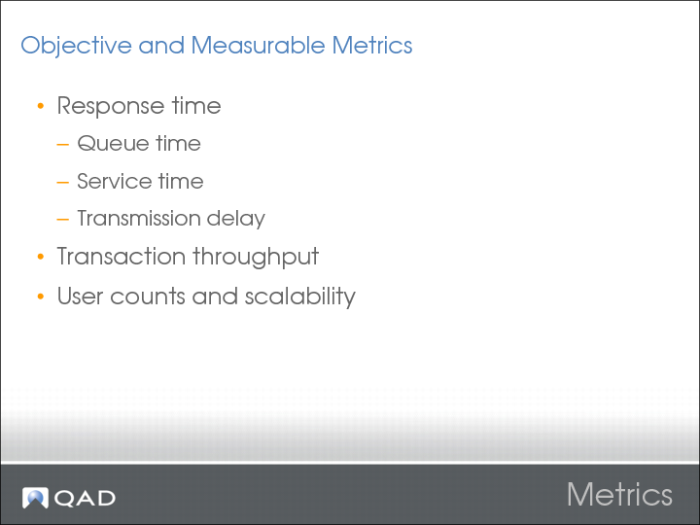
Metrics
• Utilization: The percentage of time the device is busy doing work.
• Capacity: How much work can be processed at maximum utilization.
• Bandwidth: The capacity of a device or interface to transfer data.
• Queue Time: Any delay processing a service request because the request is queued.
• Service Time: How long it takes to process a work request.
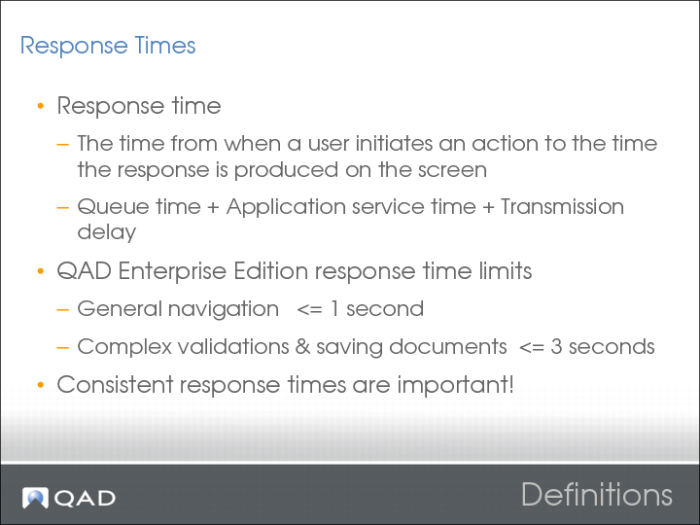
• Response Time: Service Time + Queue Time + Network / Transmission delay.
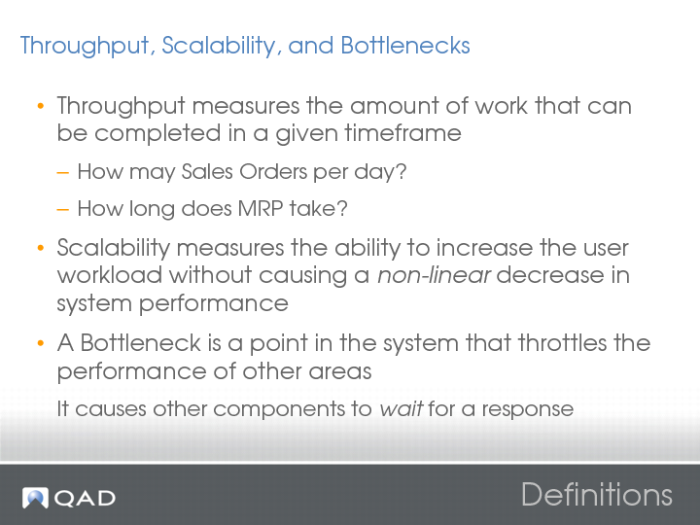
• Throughput: The rate at which work requests are completed.
• Scalability: How does Response Time and Throughput vary as extra users/load is added?
• Bottleneck: The component slowing everything else down because it is at the capacity limit.
Performance Definitions
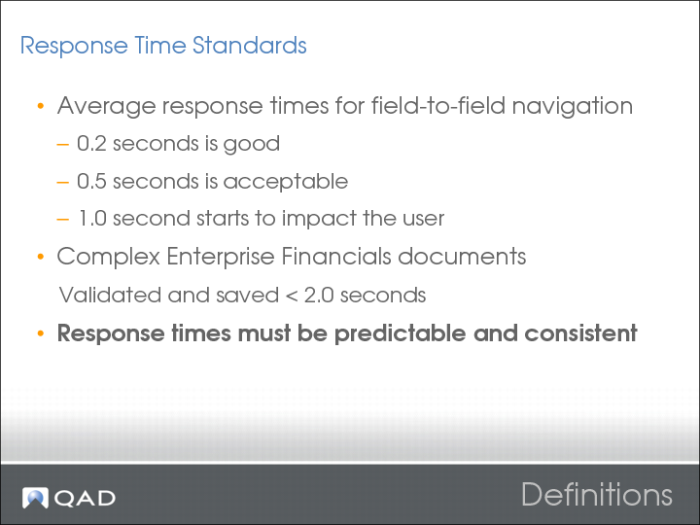
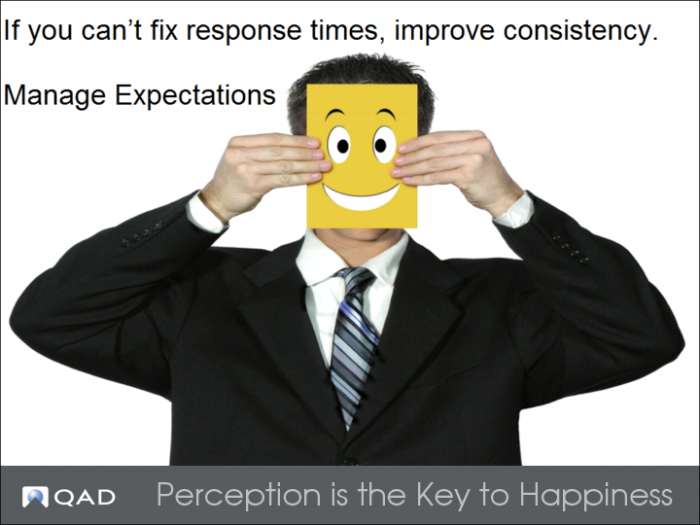
Studies have shown that user productivity increases significantly when system response times are consistent, even if the average response times are slow.
Performance Definitions 2
Performance Definitions 3
Performance Definitions 4
Performance Expectations
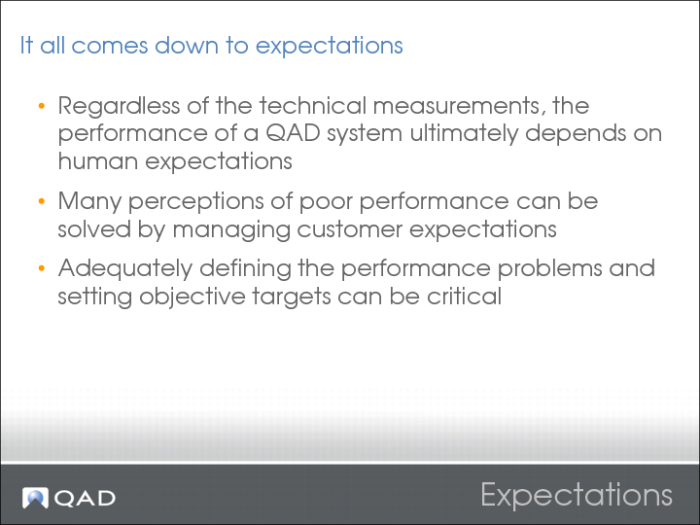
Regardless of the technical measurements, the performance of an application depends on human expectations. Many perceptions of poor performance can be solved by managing the customer relationship, instead of embarking on a time consuming and costly exercise to tune the QAD software environment.
Often the customer has overly optimistic expectations as a result of the sales process; resetting their expectations can change their perception of the software performance from unacceptable to acceptable.
Defining current performance issues, setting performance objectives, determining key performance indicators (KPIs), and using a performance engineering methodology can be critical in managing customer perceptions and expectations.
Performance Perception