Review
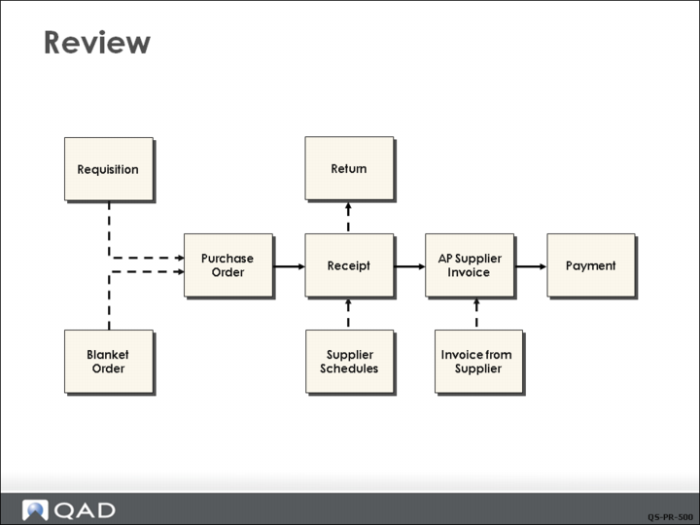
Here is a review of the highlights of the purchasing and accounts payable flow.
• Purchase Order. The starting point for payment processing is the purchase order—a contract that confirms your intent to buy. It lists items, quantities, and prices, along with related charges such as taxes and freight. The order also states your billing and shipping addresses, and the credit terms you have negotiated with the supplier. Purchase orders can originate from requisitions, blanket orders, or can be created directly.
• PO Receipt. When the items are delivered to your Receiving Department, a receiving document is recorded (PO receipt). The receiver confirms the received items and quantities against the purchase order. Receipts can also be based on supplier scheduled orders.
• Invoice. The supplier sends you an invoice to confirm your liability to pay for the items under the conditions specified on the purchase order.
• Supplier Invoice. Before you can pay the invoice, you need to verify that the items you received are what you originally ordered and that the supplier has charged you the correct price. To do this, you record a supplier invoice in Accounts Payable. When you enter the supplier invoice, you reference the purchase order and the invoice. The system then retrieves the receivers associated with the purchase order so that you can record invoice lines against them. If the invoiced items and quantities match the receiver, the receiver is closed.
• Payment. Supplier invoices are then selected for payment and are processed by printing checks, electronic funds transfer, drafts or other payment instruments. The process is managed through status codes from initial receipt to paid status.