Overview
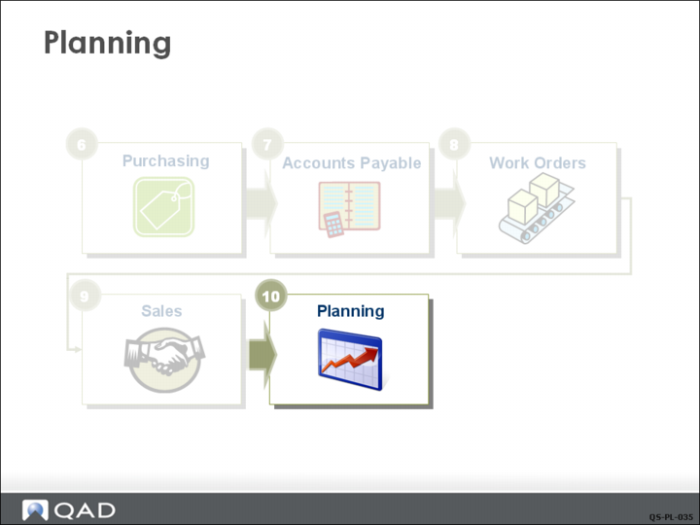
Planning ensures the timely, efficient and economic movement of material to the marketplace. Material is probably the most visible element that is planned, but material plans need to be linked to plans for sales, manufacturing, and distribution operations, personnel, plant and equipment. When they are linked, all of these planning elements contribute to the balancing of supply, demand, and resources. This chapter reviews the interaction of some of these planning elements in the Example section, especially those among purchasing, manufacturing, and sales.
Chapter Topics
First, the primary components of the planning system are introduced in the Key Concepts section.
• Key Concepts
Production Planning
Forecasting
Master Schedule
MRP and Action Messages
Item Planning Parameters
Planned Orders
• Example
Enter Forecast
Process Sales Order
Regenerate MRP
Process Purchase Order (approve planned orders)
Process Work Order (approve planned orders)
Post Transactions
• Review
• Exercise
Learning Objectives
When you finish this chapter, you should be able to:
• Provide examples of production plans, end-item plans, and component-item plans.
• Name the key input to the Master Schedule.
• Explain forecast consumption.
• Describe forward and backward consumption.
• Define the term Time Fence.
• Explain how Order Policy and Order Period are related.
• Enter a forecast.
• Read Master Schedule Summary and Detail Inquiries.
• Read MRP Summary and Detail Inquiries.
• Approve planned purchase and work orders.