SSM Training Course Outline
Most of the functions in SSM are interrelated: to fully understand one, you need to know something about all of them. In addition, many features of SSM are optional. Which features you use will depend largely on your own business requirements.
This course will give you an introduction to the entire scope of SSM, but it does not provide detailed instructions on all features. It follows the progression illustrated in the previous slide: setup, warranties and contracts, call management, service activities, and billing.
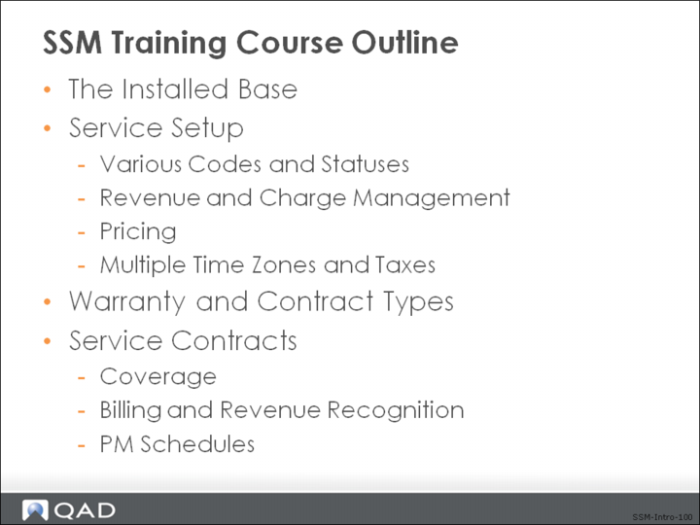
Most of the activities listed on this slide have to do with what is loosely termed implementation. Decisions regarding the installed base influence service policy. Warranty and contract types define your relationships with end users. Contracts drive coverage and billing, allow for deferred revenue recognition and provide means to schedule PMs.
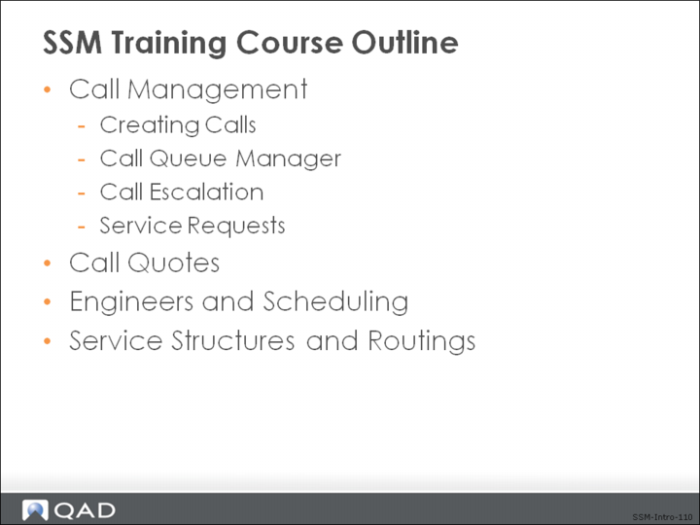
Call Management records your daily interactions with end users. Call processing may be relatively simple or complex, depending on how many of the optional call management features you decide to use.
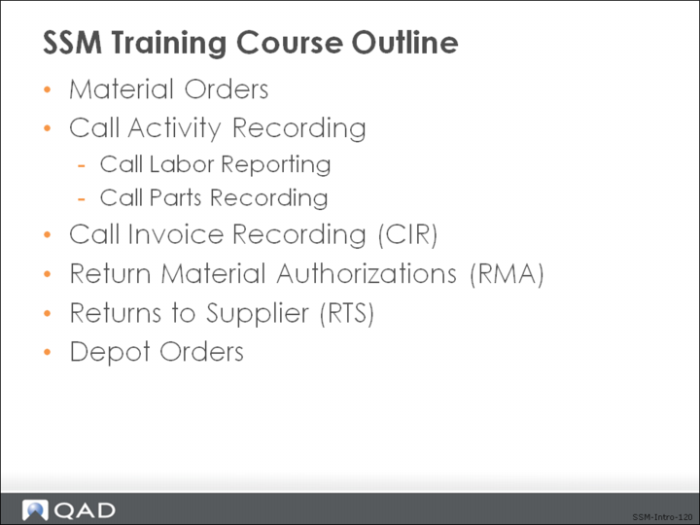
Call processing includes the recording of service activity to resolve the call, the definition of the parts and actions needed, the management inventory (both to and from the customer) and the generation of invoices.
RMAs and RTSs provide alternate ways of managing simple replacements and returns.