What are the typical Visual Displays supporting Pull
These control boards fall into three general categories:
• Those that are used in conjunction with kanban or flow mechanisms to schedule replenishment.
• Process monitoring, performance and feedback boards.
• Workplace organization and documentation displays.
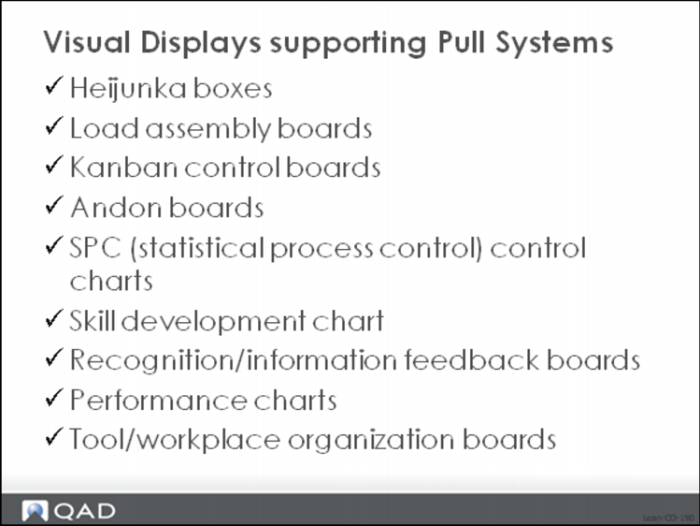
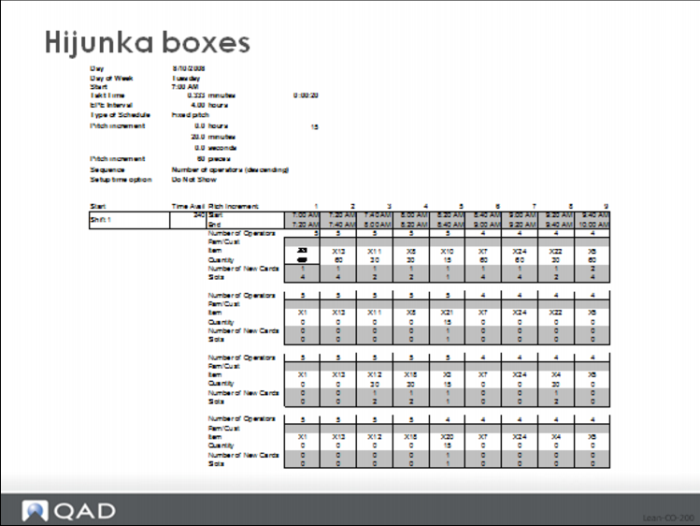
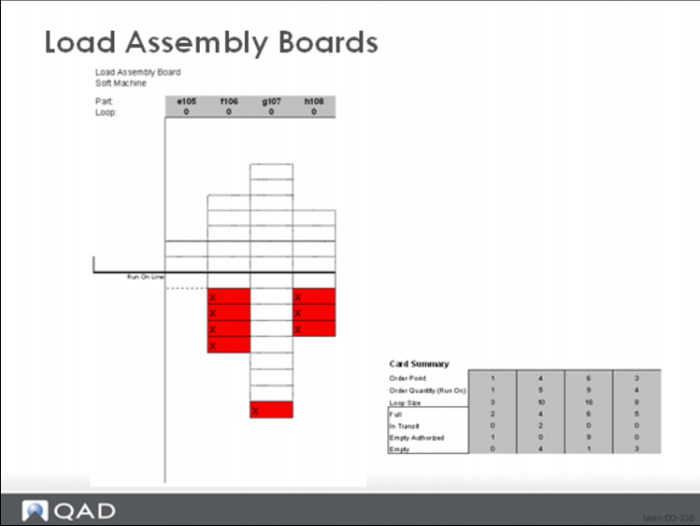
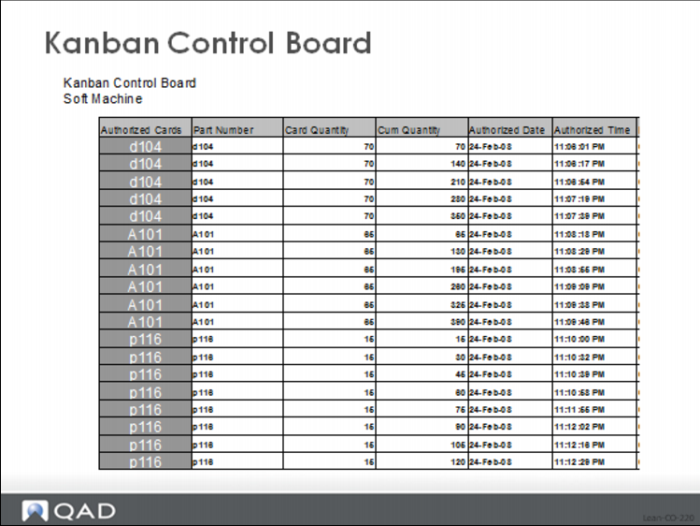
For flow, the visual scheduling mechanism is the heijunka or leveling box. For processes that are part of the pull system, the basic mechanism for communicating what to work on first, and what to work on second, and what to work on third is the kanban control board. Here the sequence of work to be done is normally based on the date of authorization (first cards authorized are the first to be produced), although in some instances the work sequence can reflect other considerations (the run-out date for each of the parts, product wheel considerations, etc.). Another important visual control board is the load assembly board that keeps track of the empty kanbans for each item until enough have accumulated to reach the lot size (and therefore authorize production). An andon board or andon light is another visual control used in conjunction with kanban or flow scheduling mechanisms. An andon light is a kind of self-stop device that signals that a process is about to go down or is down and needs assistance.
Below you can see examples of three major visual control boards related to scheduling: the leveling box, the load assembly board and the kanban control board. For many companies, these are and will continue to be purely visual, manually maintained communication mechanisms. However, for other companies who want visual displays without physical proximity—a way to see schedule status from a training or conference room, or the ability to see kanban status from a vendor site—it can make sense to provide an electronic version of these control boards, and these are provided as part of the QAD Lean software and will be described later in this course along with the transactions and tracking required to maintain the data.
The next three examples shown, electronic versions of the Heijunka Box, Load Assembly Board, and Kanban Control Board, are reprinted with permission from Chris Gray’s book Lean Standard System.
Example 1: Hijunka Boxes
Example 2: Load Assembly Boards
Example 3: Kanban Control Board