Introduction to Sales Orders
Overview
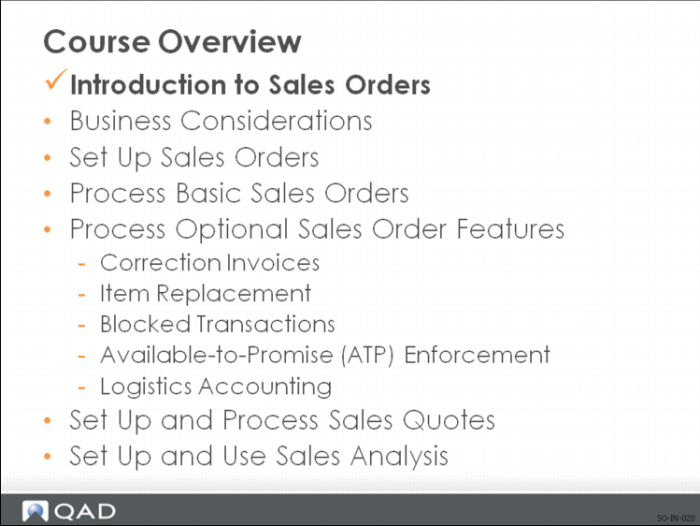
This introduction provides an overview of what are covered in this class.
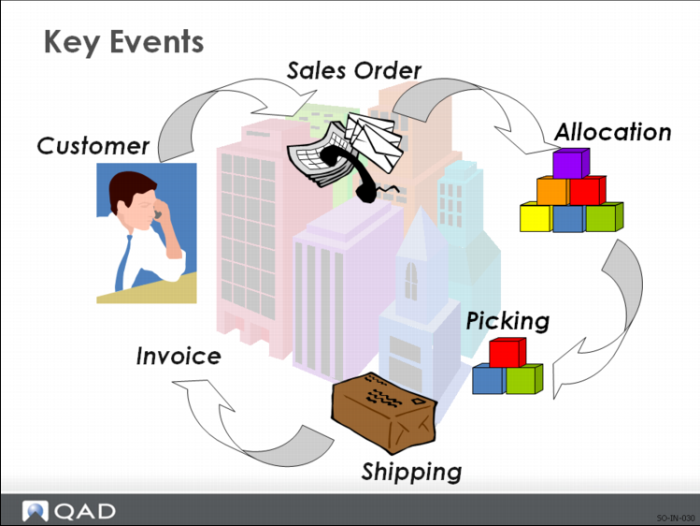
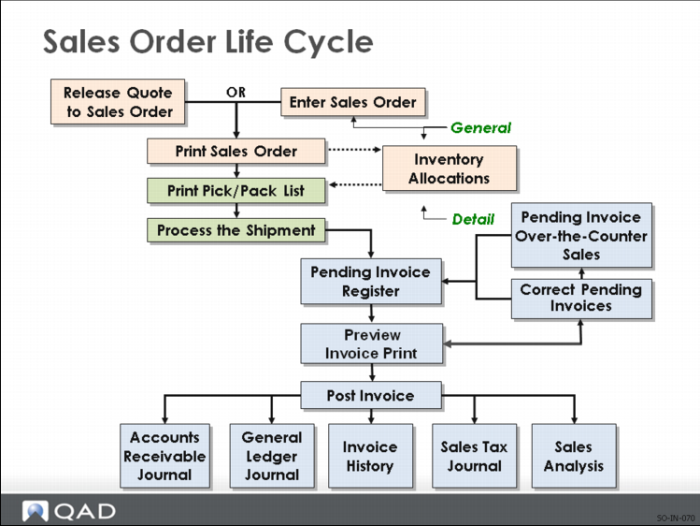
Sales Order Key Events
• Customer places quote or sales order
• Inventory is allocated
• Inventory is picked
• Shipment is processed
• Customer is invoiced
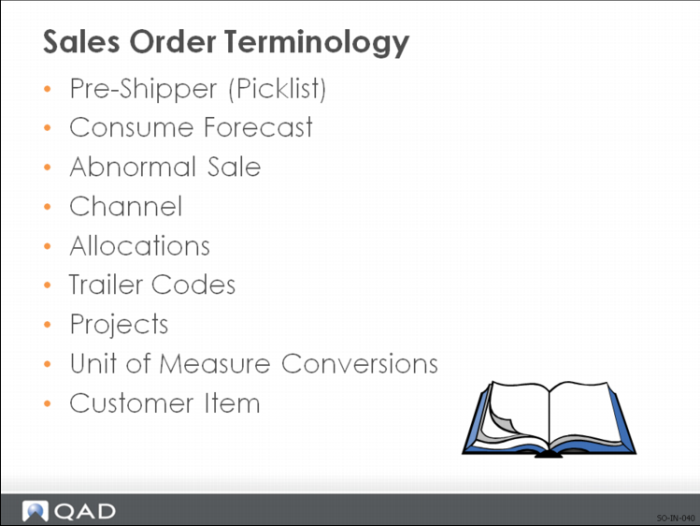
Terminology
Pre-Shipper
A preliminary and temporary shipper created either automatically from detailed allocation, or manually using the Pre-Shipper/Shipper Workbench. Pre-shippers are also referred to as picklists.
Consume Forecast
Determines whether the quantity ordered consumes available forecast.
Abnormal Sale
Unexpected sale, not included in the forecast.
Channel
Identifies the distribution channel through which this sales quote, order, or invoice originated.
Allocations
The act of reserving inventory for a specific purpose. Does not name specific inventory, and no physical movement of inventory takes place.
Trailer Codes
Special add-on charges that apply to customer orders.
Project Code
Optional component of an account number defined in GL setup functions. Other components are account, sub-account, and cost center. Project codes are not available for all GL transactions. Inventory value, but not physical inventory, can be tracked by project codes.
Unit of Measure Conversion
The ratio of the alternate unit of measure to the item’s unit of measure.
Customer Item
Item which customer orders but using the customer’s own item number.
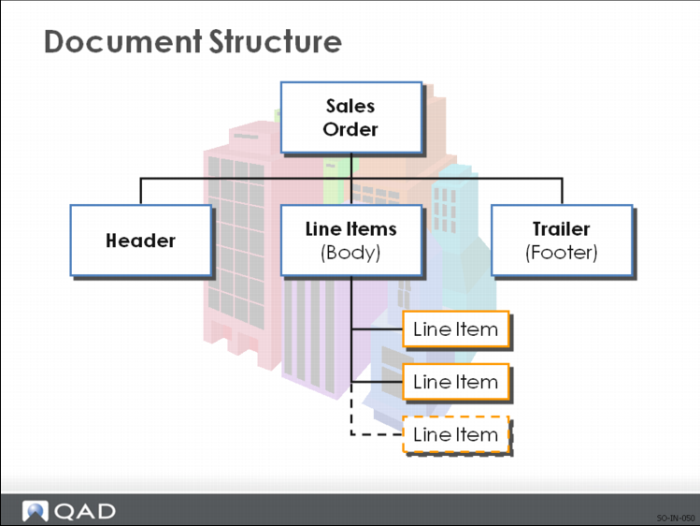
Sales Order Document Structure
Parts of the sales order consist of a header, line items, and a trailer. Each part is displayed in a separate frame.
Header
The header frame includes the sales order generic information:
• Defines customer information
• Applies to the entire order
Line Items
The line items frame includes all items on the order. Each line item lists:
• Item number
• Quantity ordered
• Unit of measure
• Pricing information
Trailer
The trailer frame presents the total value of the entire order, including any taxes, discounts, and special charges that might apply.
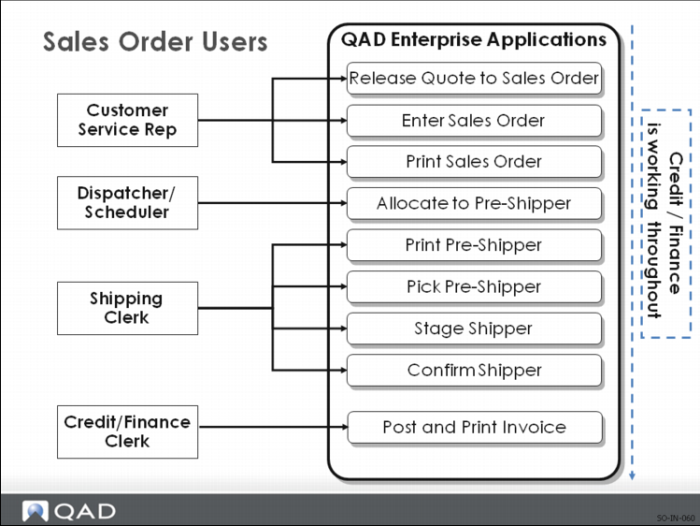
Sales Order Users
Various people typically control key tasks:
• Sales representatives enter sales orders into the system
• Schedulers create pre-shippers and the allocations
• Shipping clerks can do any or all of the shipper documents
• Credit/Finance clerks manage invoicing processes
Sales Order Life Cycle
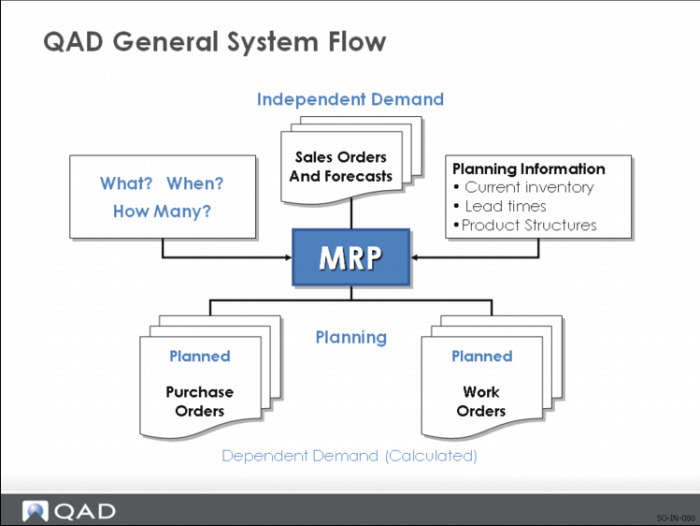
QAD General System Flow
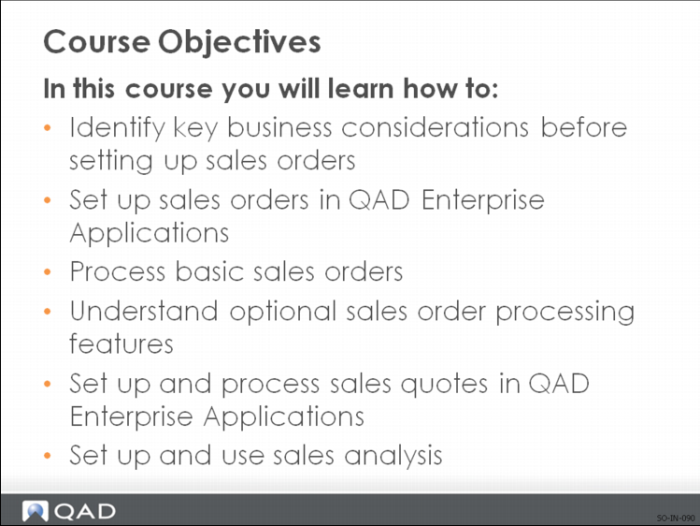
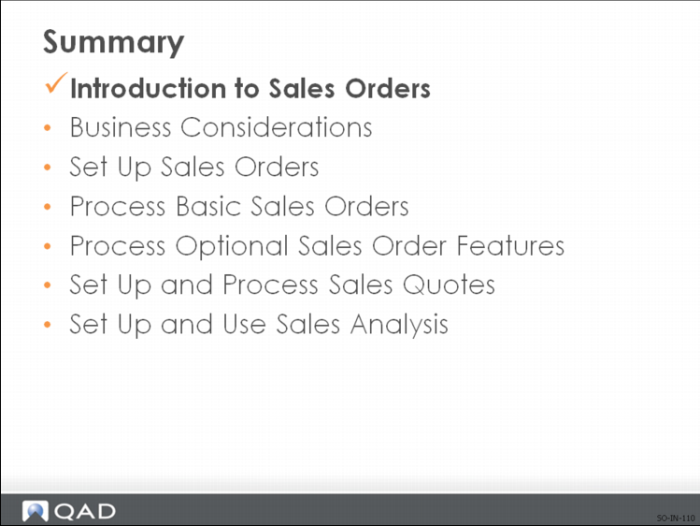
Course Objectives
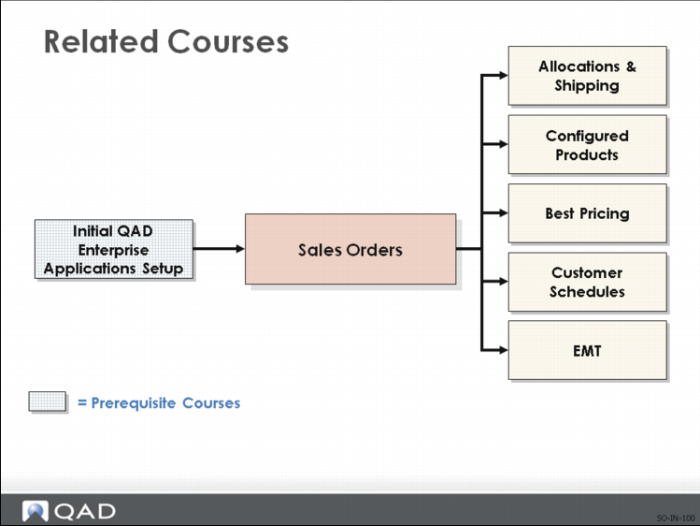
Related Courses