Periodic Costing Calculations
Periodic calculation of actual costs for items is based on transactions. With periodic costing, the system applies the actual cost of labor, burden, and overhead for the period. You can run periodic costing to calculate the cost and create the GL transactions.
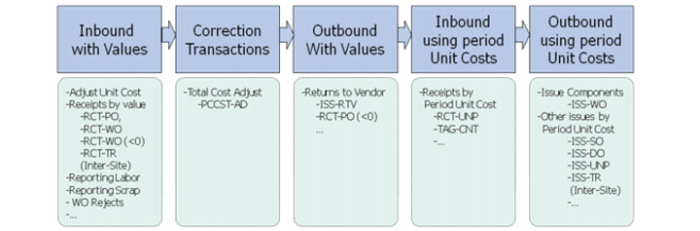
The periodic costing calculation process gathers all inventory and production transactions that happened during the period you set in PC Periods Maintenance (30.5.1.1) that affect costing. Periodic costing functions reorganize the transactions in a sequence that addresses the periodic costing method purposes. The cost sorting is as follows:
• Inbound with value:
• (0) Unit cost adjustment
• (1) Reporting of labor
• (2) Scrap (repetitive)
• (3) Receipts by value (PO, WO or returns)
• (4) Reject (work order)
• Correction/adjustment transaction:
• (5) Total cost adjustment
• Outbound with value:
• (6) Issues by value (returns)
• Inbound using periodic cost:
• (7) Receipts by periodic cost
• Outbound using periodic cost:
• (8) Issue components
• (9) Other Issues by average (SO and so on)
The sorting applies to all cost methods for periodic cost calculation: WAVG or FIFO
Period costing does not have the concept of variances because there are no fixed costs to be evaluated. Instead, it is recalculated every period and a new item cost is defined according to what happened that period.
The following figure depicts the flow and provides examples of transactions.
Calculation Flow
The
The following figure depicts the selection among items during calculations. The sequence is by MRP level.
Selection Among Items
