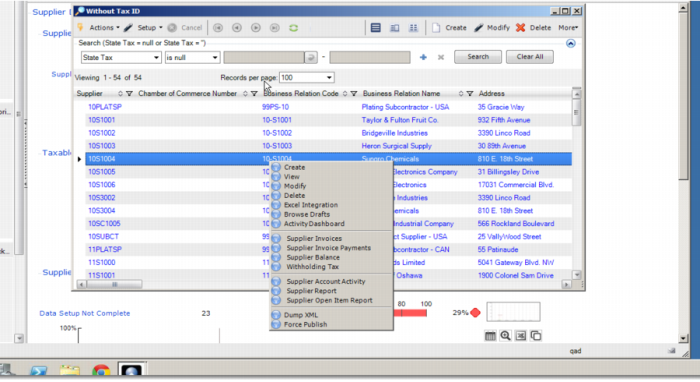
Accessing Additional Functions
Finally, you can also bring up other functions in some of the panels that display. You can right-click to display menus of additional functions, or you can access functions in the top menu bar, such as create and modify functions. For example, when you click in the Outbound Material Handler dashboard’s Sales Order to Ship panel to display the Sales Order to Ship browse, the system presents buttons in the browse that let you ship the order, print the packing list, or print labels from the browse.
For each dashboard described within this user guide, you can find a table that lists the maintenance functions and other functions you can access from the dashboards’ supporting data.
Additional Functions
Role-Based Dashboards
The role-based dashboards in the system attempt to achieve the following multiple basic goals:
1 Provide focus to daily work. What are the key activities that a worker in a particular role must do each and every day? What kinds of data or information would help that worker prioritize the daily work? Is it possible to provide an effective index to the current backlog of work, isolating the vital few problems that need to be addressed from the trivial many that can be safely deferred? Where can workers best spend their limited time?
2 Wherever possible, extend the existing capabilities of the core ERP system. In some cases, this takes the form of additional functionality; in other cases, it reorganizes the way existing data displays for you, which, in effect, improves the user interface to key system functions.
3 Show current performance against key metrics and key performance indicators as well as how performance has changed over time.
4 Provide more real-time metrics as alerts to issues while there is still time to take action. While there are still many displays of historical performance and trends, the key to improving performance is to shorten the response time between when a problem occurs and when workers know about it. Knowing that there was a dip in on-time performance two months earlier is interesting, but this is mostly just score keeping. However, knowing that there was a dip in on-time performance this afternoon provides workers with enough time to take action, such as adding personnel to the production line, deciding to work overtime, and so on, to resolve the issue before it affects the on-time performance for the day.