Revaluation
A transaction in a foreign currency is recorded initially in the base currency by applying the exchange rate between the base currency and the transaction currency at the date of the transaction. However, GAAP rules stipulate that balances on accounts denominated in foreign currency be reported using the closing rate for the GL period in which the transaction was recorded.
You typically revaluate at the end of every GL period, and the process is more commonly used by international organizations, since a US entity dealing in USD only never needs to revalue.
The revaluation process involves revising amounts in non-base currency accounts based on the exchange rate in effect at the end of a GL period. GL accounts denominated in non-base currency or accounts that accept postings in all currencies are subject to revaluation.
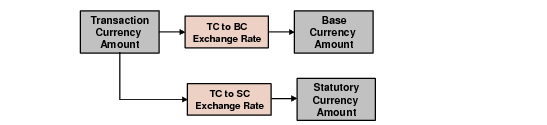
When you create transactions in the system, you can use either the base currency or the transaction currency. If you use the transaction currency, the system converts the transaction amounts to the base currency using the current accounting exchange rate. You can modify or replace this exchange rate before posting.
There are two types of revaluation:
• Revaluation of transactions denominated in a non-base currency, relative to the base currency
• Revaluation of transactions denominated in a non-base currency, relative to the statutory currency
Types of Currency Amount and Exchange Rates
The exchange rate differences for a certain item must be recorded in each GL period until the period in which the item is closed. The exchange rate difference is then reversed on the first day of the next GL period. When the item is closed, the exchange difference is realized.
Accounts can also be revalued based on balances or activity. Balance sheet accounts are revalued based on the year-to-date balance, and profit and loss accounts are revalued based on activity. These settings cannot be changed.