Periodic Costing
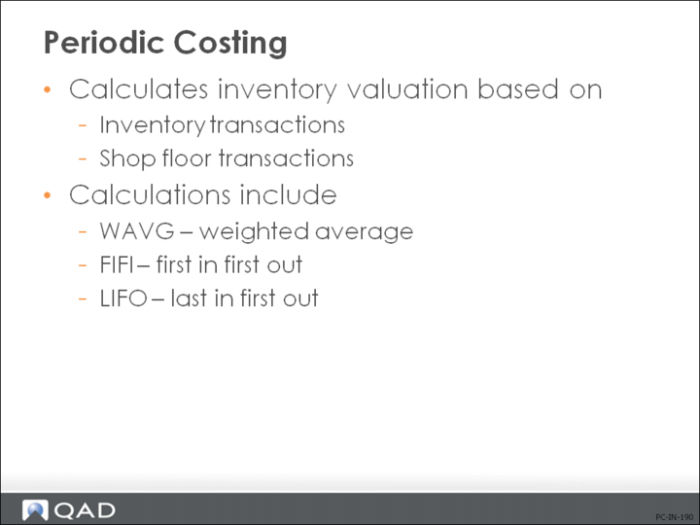
Periodic costing is a cost method for inventory valuation that calculates periodic item unit costs based on inventory and shop floor transactions. Periodic costing uses cost-calculation formulas such as weighted average (WAVG), first in first out (FIFO), and last in first out (LIFO) that support:
• Local legal requirements for certain countries
• International financial Reporting Standards (IFRS) guidelines
• Business practices in corporations with regards to inventory valuations
Programs on the Periodic Costing menu (30.5) optionally calculate the cost of an item based on recorded data, such as inventory transactions, BOMs, routings, purchase prices, and labor/burden expenses over a certain user-defined period. The period can be any length, up to an entire GL period. Under most circumstances, periodic costing considers the beginning balance of the item while it is performing calculations. It then batch generates GL transactions based on the calculations.
Study Questions
What are the three cost methods supported by QAD?
What is a major difference between standard and average costing?