Messaging and Workflow
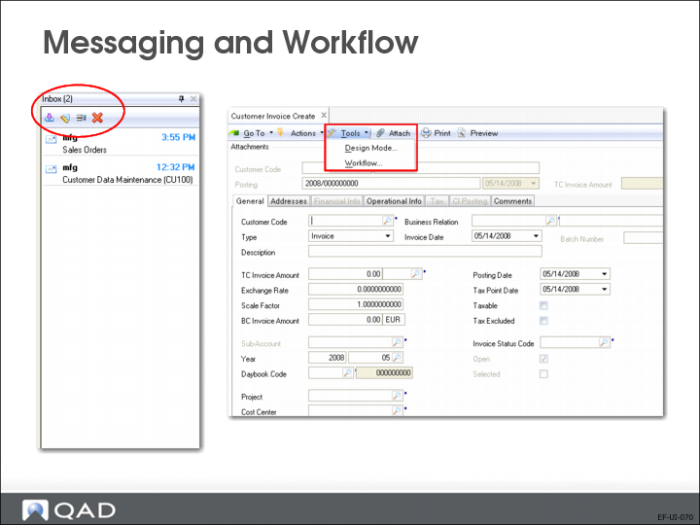
The Financials application includes full emailing capabilities. In addition, you can access workflow functionality in component-based functions (those displaying in tabs). This feature lets you create and initiate workflows between users or roles.
Example: When a new customer record is created by a Financials user, a workflow is initiated for an operational user to set up the operational data for the customer.
The workflow supports the segregation of duties and adds efficiency to day-to-day tasks.
Creating a Workflow
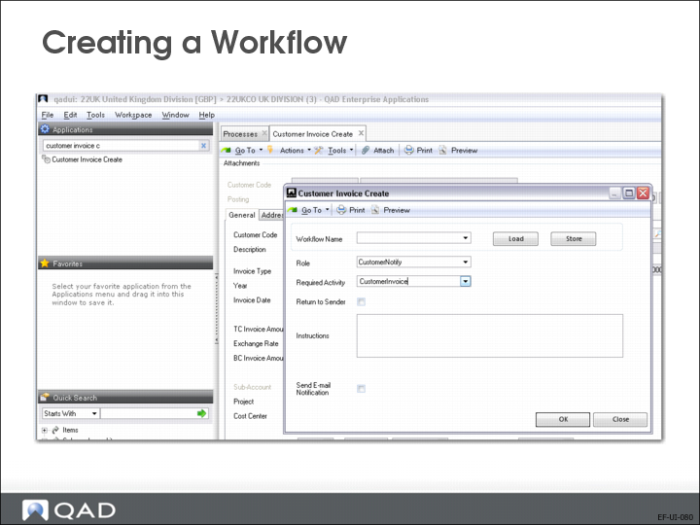
To create a new workflow, select the function from the Tools drop-down list on the menu tool bar. Name the new workflow, assign it to a role, and specify the required activity. Additional instructions can be added in a text comment box.
You can then initiate the workflow or store it for later use and reuse.
Favorites
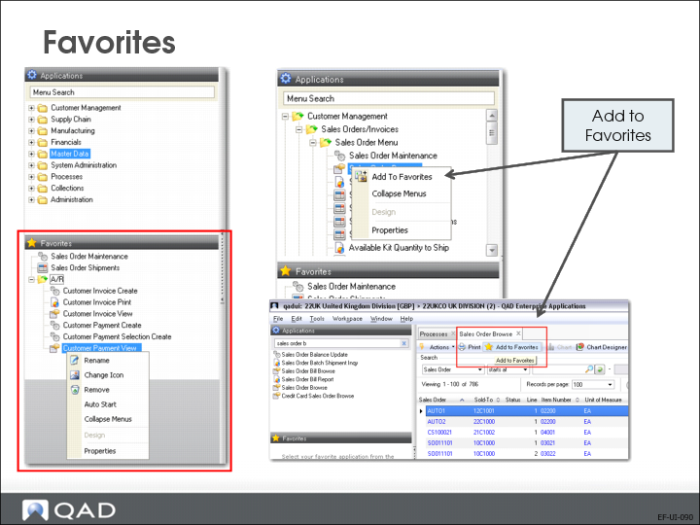
Use the Favorites pane to provide faster access to the menus that you use every day.
Add menus to your Favorites pane by right-clicking on the menu name on the menu list, by dragging and dropping the item from the menu list, or by clicking the Add to Favorites icon in the menu.
You can rename items in your favorites, and group them in directories.
Direct Menu Access: GoTo
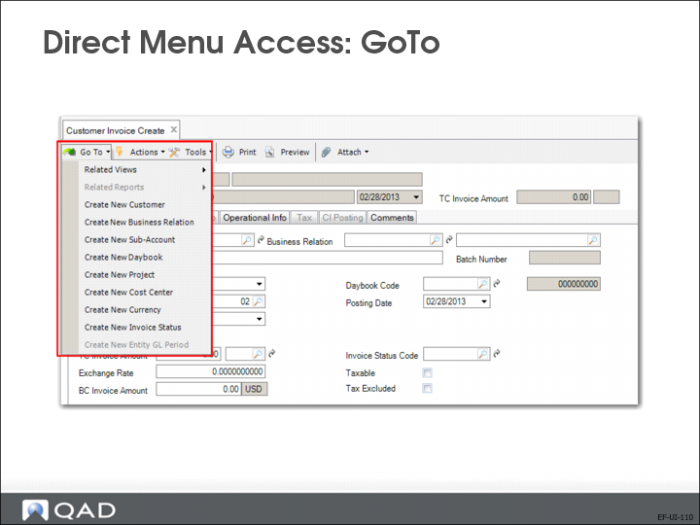
The GoTo function provides a faster way to access menus. Depending on the screen you are currently in, the GoTo menu lists other functions related to the current screen.
GoTo behaves differently, depending on whether the current field with focus contains data:
• If the field has a value, GoTo invokes the View activity.
• If the field is blank, GoTo invokes the Create activity.
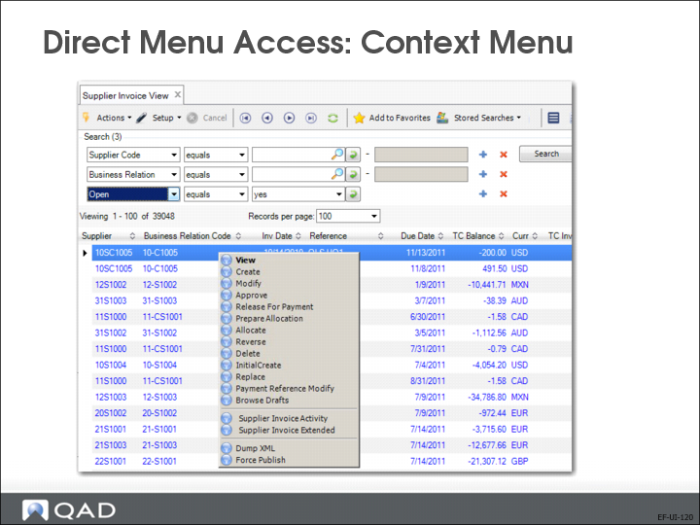
Direct Menu Access: Context Menu
In browses and views, you can access record-specific activities by right-clicking on the blue underlined record. Create, View, Modify, and Delete are standard activities available for most component-based records. However, some functions have additional activities, for example, in the Supplier Invoice Browse for View, the activities you can access include Release for Payment, Prepare Allocation, Allocate, Reverse, and Replace.
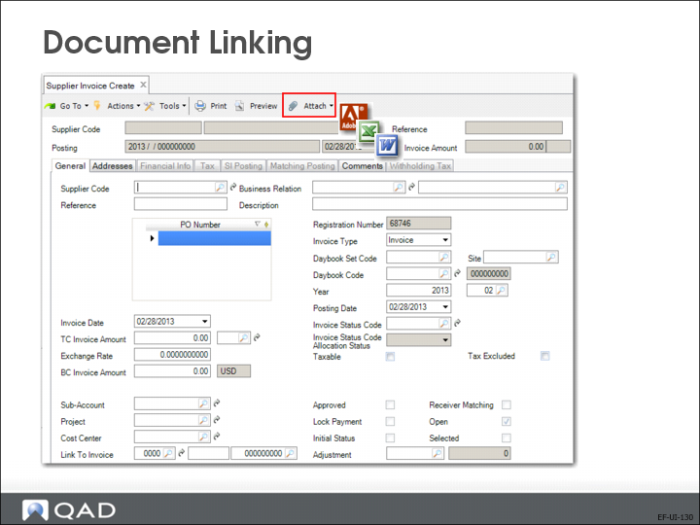
Document Linking
In QAD Enterprise Applications, you can link various types of documents, such as PDF, Excel, and Word documents, to records.
Example: You can attach scanned invoices to supplier and customer invoice records.