Forecasting Methods
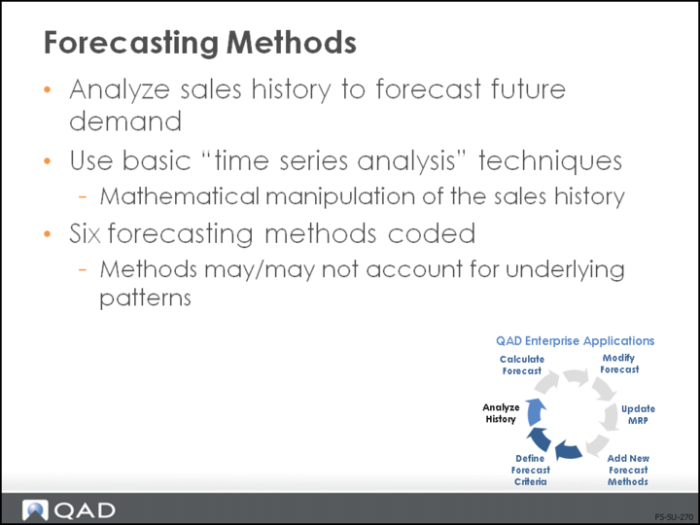
• Calculation methods examine sales history to make mathematical predictions for future product demand
Method Codes
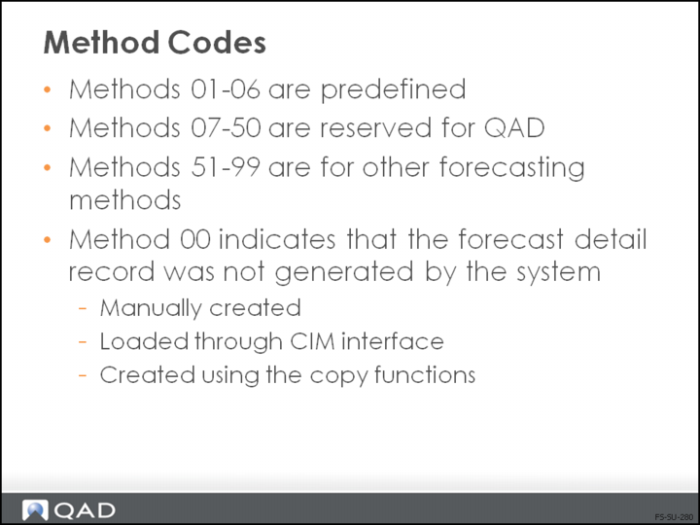
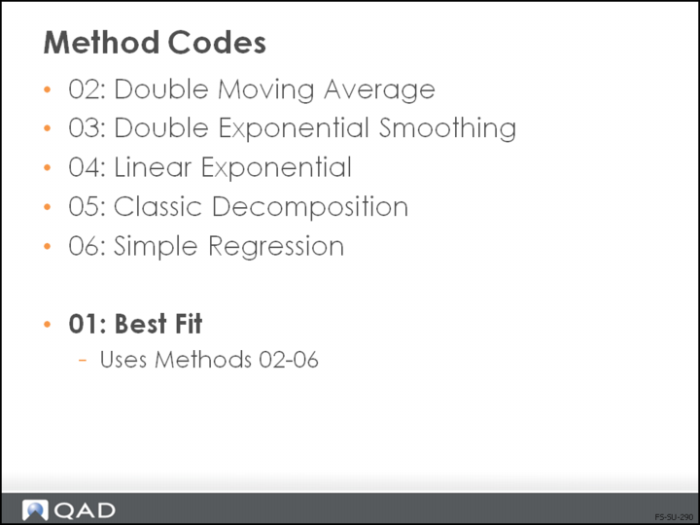
• QAD Enterprise Applications offer you six predefined forecast methods
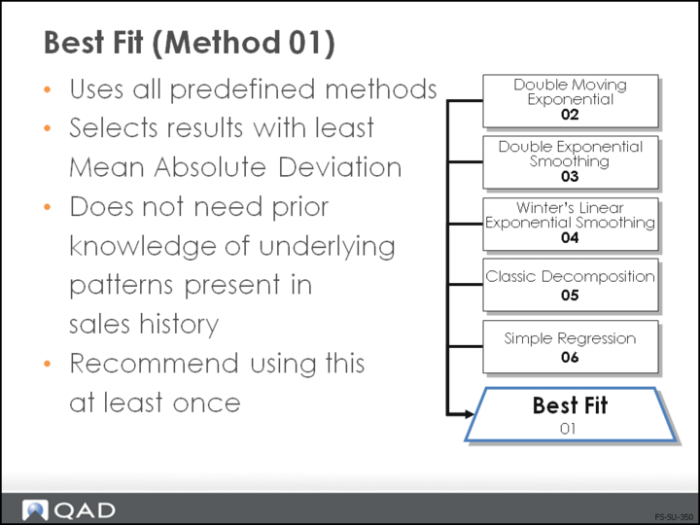
• A choice of best fit is based on the least mean absolute deviation of the other five
• You can add additional methods to the system with User Forecast Method Maintenance (22.7.17)
• The existing calculation methods provided in QAD Enterprise Applications are methods 02-06
• Method 01 examines the results of 02-06 to select a best fit solution
• Each of these codes is discussed further in the following pages
Double Moving Average
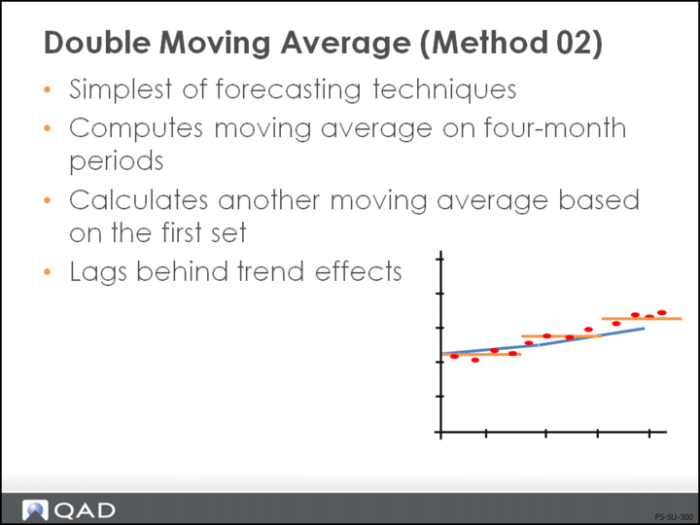
• The simplest of the forecasting techniques
• Used a set of simple moving averages based on historical data, then computes another set of moving averages based on the first set
• Produces forecast that lags behind trend effects
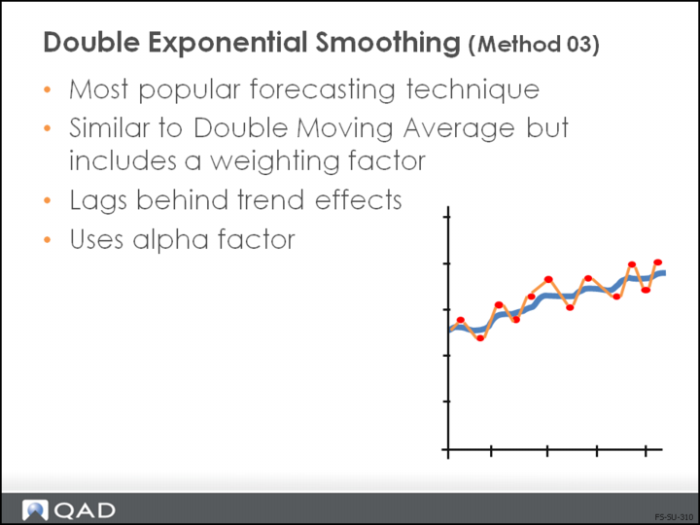
Double Exponential Smoothing
• The most popular of the forecasting techniques
• Uses the alpha factor to weight the most recent sales data more heavily than the older sales data
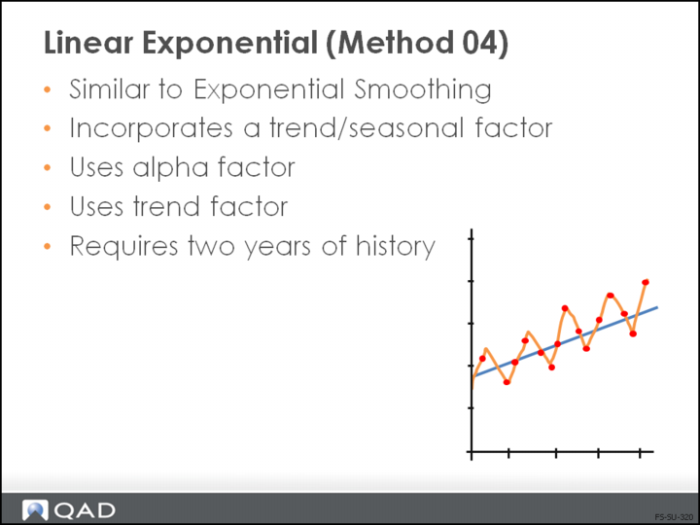
Linear Exponential
• Produces results similar to Double Exponential Smoothing
• Extra advantage of incorporating a seasonal/trend adjustment factor
• Uses both trend and alpha factors
• Large trend (close to one) weighs heavily any sharp changes in sales
• Small trend (close to zero) begins to ignore sharp increase/decreases
Note: Requires minimum of two years of sales history
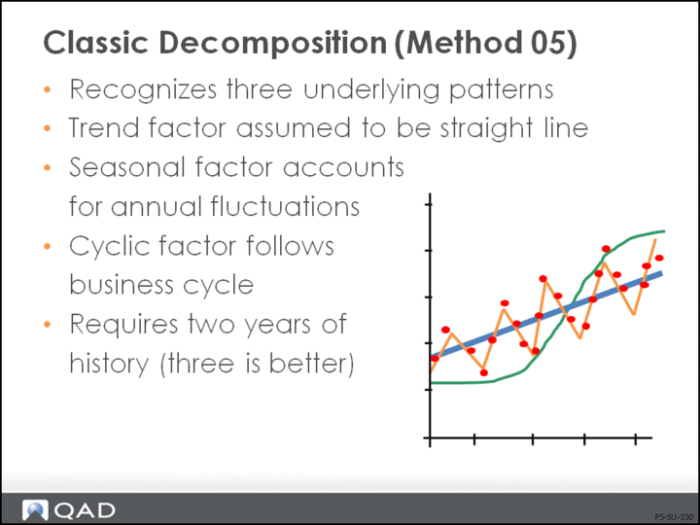
Classic Decomposition
• Usually the preferred method for seasonal, high-cost items
• Eliminates all random fluctuations
Note: Requires a minimum of two years sales history. Better forecast with three years history.
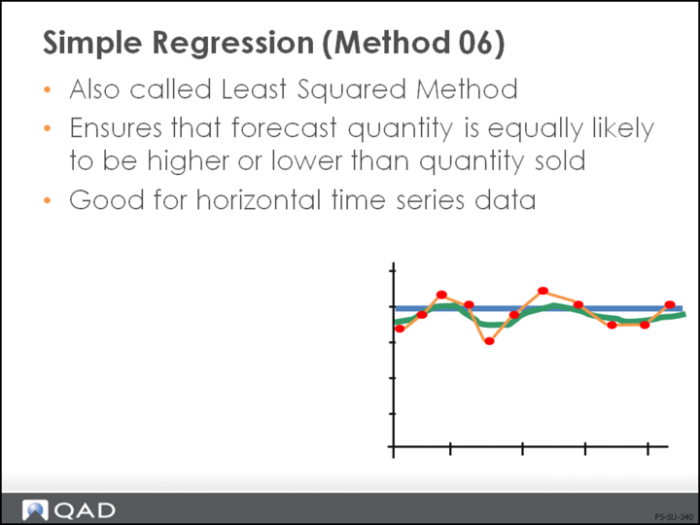
Simple Regression
• Analyzes the relationship between objects (sales) and time space (month)
• Good for products with a stable history
Best Fit
• Best Fit does take the longest to run, of codes 01-06
• Examines the results of each 02 through 06, before making a recommendation based on the least mean absolute deviation
• Recommended to be used at least once
Underlying Patterns
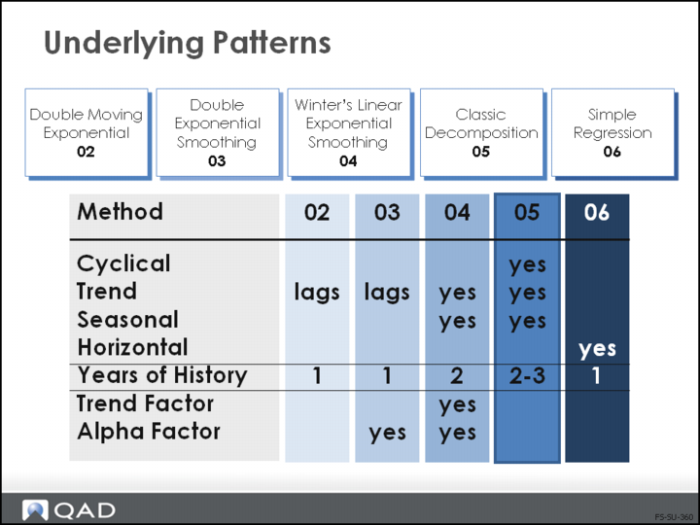
• Summarizing the methods, patterns predicted, years of history required, alpha, and trend factors for the predefined methods
Alpha and Trend Factors in Simulation Criteria Maintenance
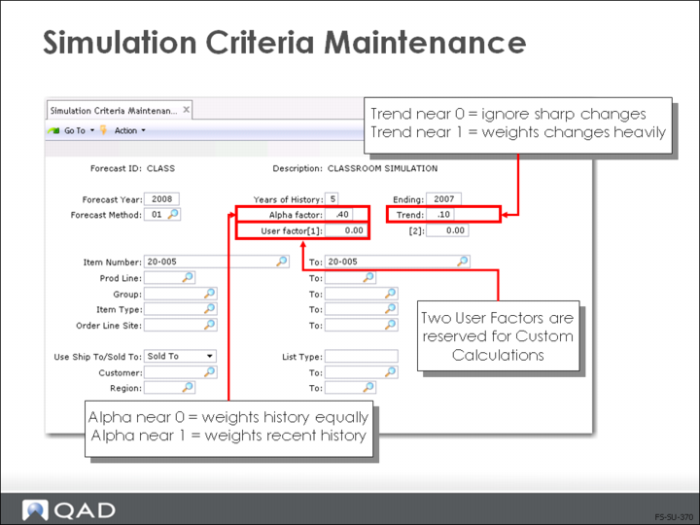
• Alpha and trend must be between zero and one
Factor | Zero | One |
Alpha | Equal weight on all history | Weighs recent history |
Trend | Ignores sharp changes in history | Weighs heavily sharp changes in history |
User Factors
• User factors (1) and (2), in Simulation Criteria Maintenance (22.7.1), are reserved for custom calculation method factors