Variances
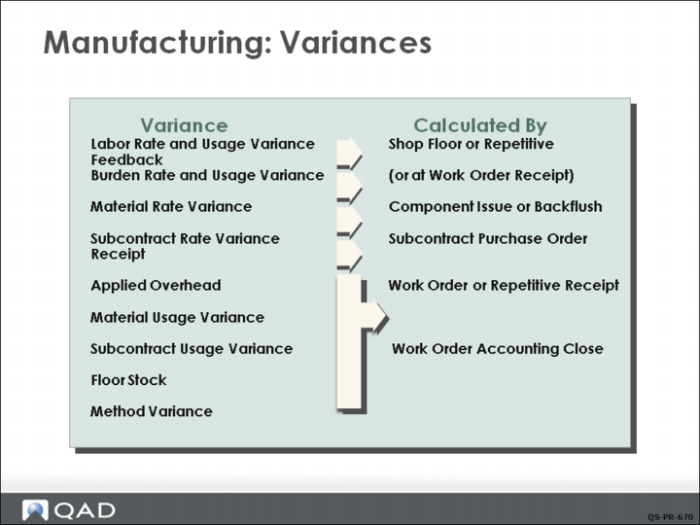
One important aspect of the entire manufacturing process is the management of cost. In a standard cost system, each item has a standard cost calculated based on the standard bill and routing. But each time the item is made, the cost may be somewhat different. These differences are tracked as variances. In QAD EE, variances are calculated and posted automatically throughout the manufacturing process. The illustration above lists the variances and when they are calculated.
Rate Variance
This reflects a difference between the standard cost and the price actually paid. The employee who did the work is paid more or less than the standard work center rate, the subcontractor charged more or less, or the material used had a different GL cost than the item listed on the work order bill. This last cause of variance may mean that a substitute item was used, or that materials were issued from another site with a different cost. It could also mean that the GL cost has changed since the work order bill was created.
Usage Variance
Usage variance reflects a difference between the standard quantity and the quantity actually used—more or fewer hours or more or less material. Both are calculated based on the quantity of inputs that should have been used to get the quantity reported as received, referred to as earned hours or earned materials.
Method Variance
When a work order is completed, Work Order Accounting Close is run to clear out any balance remaining in work in process. After all other sources of costs and variances have been accounted for, any remaining amount in work in process is posted as a method variance.