Forward and Backward Forecast Consumption
Typically, shipment forecasts are more accurate over a month than over a week. You can lessen the effects of inaccurate forecasts using forward and backward consumption.
Confirmed sales order and required ship schedule quantities automatically consume forecast in the week they are due. However, if there is no remaining unconsumed forecast for that week, the system can be set to consume remaining forecast quantities for a number of weeks before or after that week.
You can specify the number of forward and backward weeks over which to consume using the Consume Forward and Consume Back fields in Sales Order Control (7.1.24). The system consumes forecast first by going back, then forward, one period from the original forecast period. Consumption continues alternately backward and forward until the specified number of previous and future periods is exhausted. If there are sales quantities still left over, MRP recognizes them as additional demand.
MRP and master schedule planning recognize prior period unconsumed forecast as demand for the number of weeks specified in Consume Back.
If the Consume Back and Consume Forward values change, the system automatically recalculates the net forecast based on the changes.
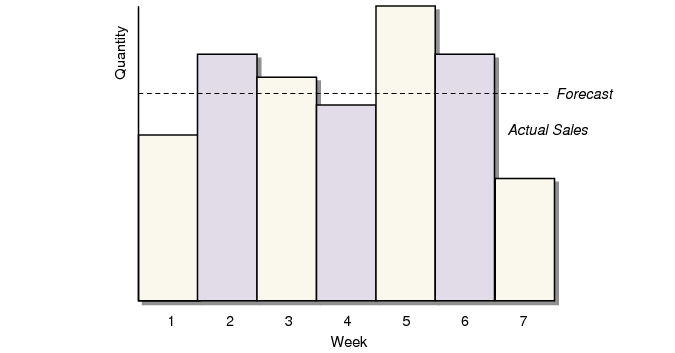
Figure 12.9 shows an example for which the Consume Forward and Consume Back values in Sales Order Control are both 2 weeks.
• Excess sales in week 2 consume the forecast in week 1.
• Excess sales in week 3 consume the forecast in week 4, then week 1.
• Excess sales in week 5 consume the forecast in week 4, then week 7.
• Excess sales in week 6 consume the forecast in week 7.
Forecast Consumption
MRP and Prior Period Forecasts
When you set up the system to consume forecast in previous periods, MRP recognizes prior period unconsumed forecast as additional demand in the current period. When this occurs, you can:
• Delete the forecast for prior periods.
This assumes that if the forecast was not fully consumed for a prior period, it was faulty and should not be considered additional demand for the current period. Use this approach to avoid manufacturing excess inventory for items for which demand will not be generated in the near future.
• Make no changes to the prior period forecast.
This assumes that unsold inventory will be shipped to fulfill future demand exceeding the current, and possibly future, forecast.
• Update the forecast for future periods.
When prior period forecasts are undersold, you can revise forecasts for future periods to reflect the difference.
Master schedulers typically use a combination of these techniques. For example, past due forecasts may be maintained for four weeks and then deleted, whereas forecasts for future periods may be reviewed and updated once a month.