QAD 2016 Enterprise Edition Training Guides
>
Financials-Advanced
>
Process Incoming Bank Files
>
Examples of Worldwide Bank File Processing
Examples of Worldwide Bank File Processing
The following pages describe two worldwide examples of electronic bank file processing: Lockbox (US) and SWIFT MT940 (Europe).
US Processing: Lockbox
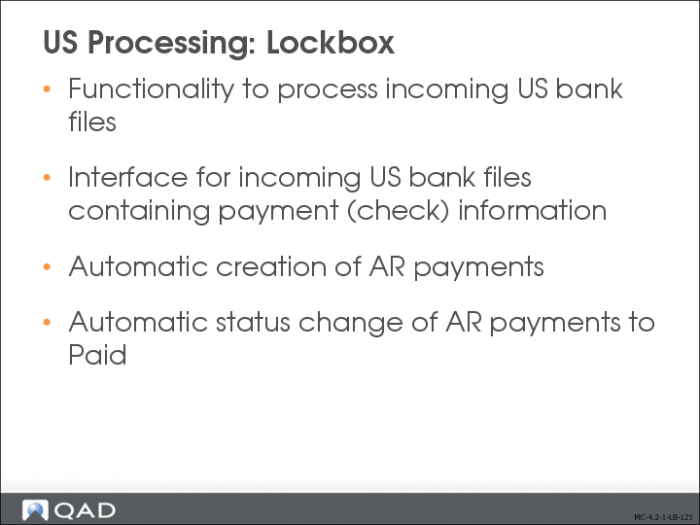
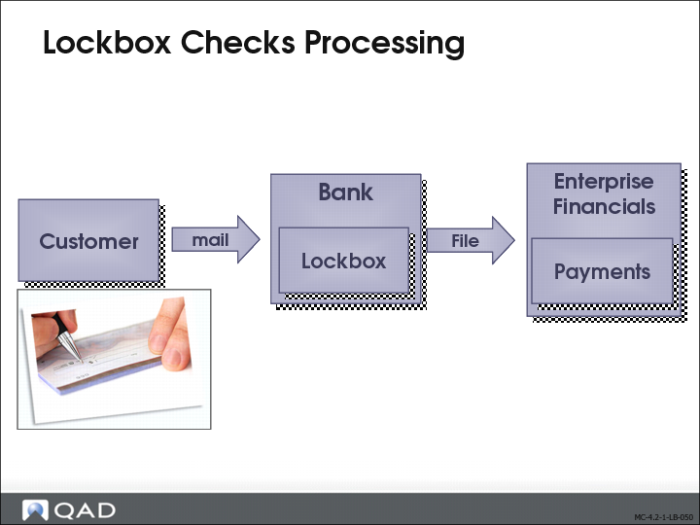
In the US, customer check payments are often sent to a lockbox (postal address) at the bank. The bank personnel empties the box daily, and registers the checks in the system. Then, the bank sends a file to the company owning the lock box. In that file, all received checks are listed.
The lockbox functionality processes incoming payment files, automatically creating AR payments and changing the payment status to Paid.
This functionality includes three business flows:
• Lock box for customer payments (checks)
• File from the bank that contains information on paid customer payments (checks)
• File from the bank that contains information on paid supplier payments (checks).
Lockbox Checks Processing
This section concentrates on the lockbox process.
Many banks use a lockbox address to handle incoming payments (check, drafts). The address is checked daily and the customer checks are registered in the bank’s system before a payment file listing the checks received is sent to your company. The Bank File Process is used to create new customer payments in the system to correspond with the checks listed.
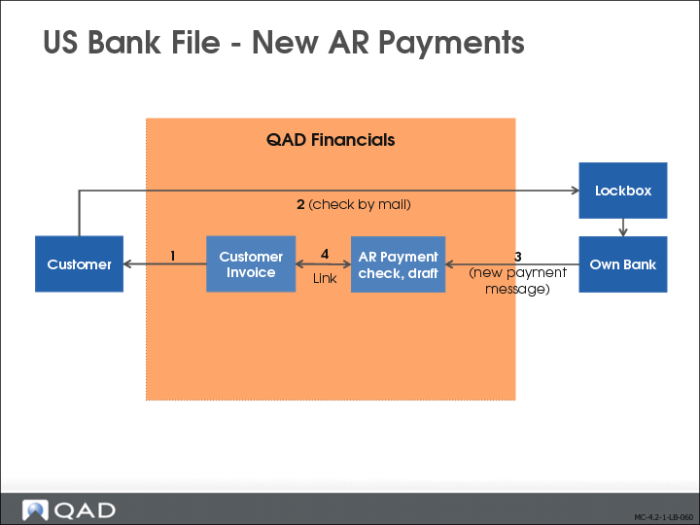
US Bank File: New AR Payments
1 A customer invoice is issued.
2 Customer payment:
a The customer pays by sending a check to the lockbox address.
b The customer sends remittance advice.
3 The bank sends an electronic file with the new check received.
4 New payments are created in the system and linked to invoices.
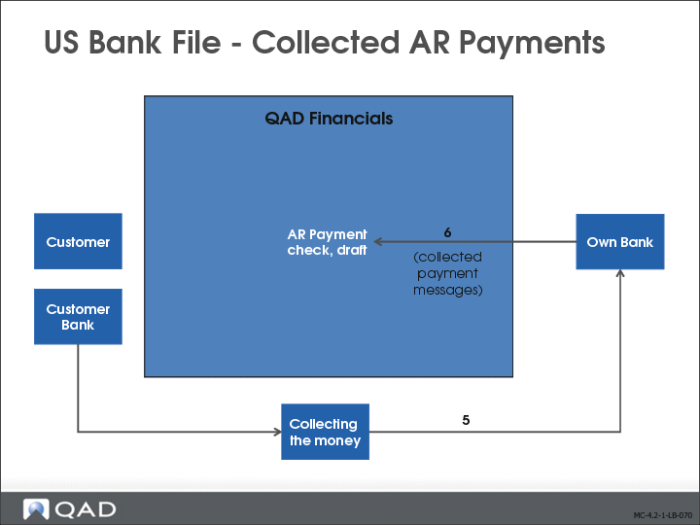
US Bank File: Collected AR Payments
The following steps are the logical continuation of the four steps on the previous page:
1 Customer payments are collected by the bank.
2 The bank sends a file containing collected check numbers. The payments can be set to Paid using this information.
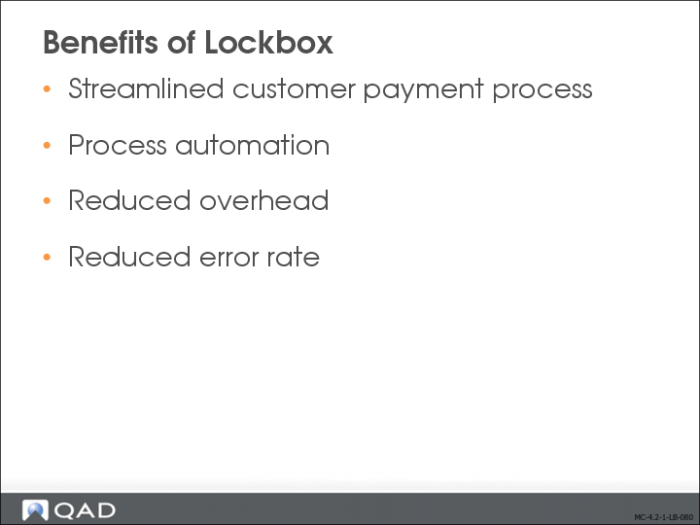
Benefits of Lockbox
The obvious benefits of this functionality are a streamlined customer payment process, reduced overhead costs due to process automation, and a decreased error rate.
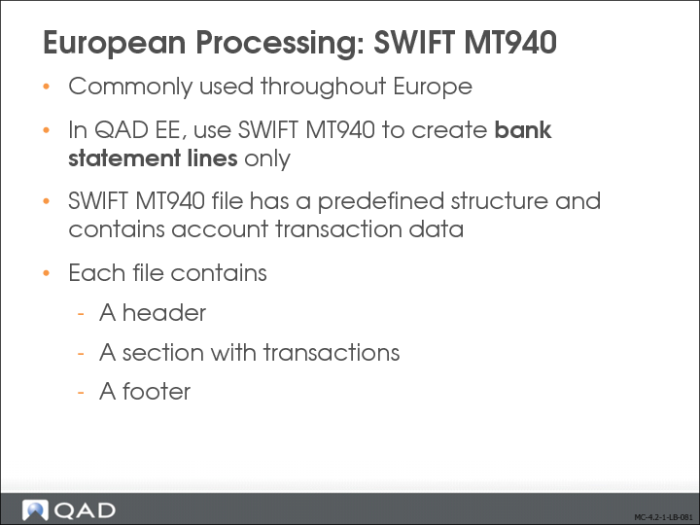
European Processing: SWIFT MT940
The majority of European interbank messaging transactions use the SWIFT network. The most common files types used to import bank transaction data to Financials are SWIFT MT940 files.
The MT940 (MT = Message Type) electronic account statement is an international standard that was developed by SWIFT in Brussels for the paperless transmission of account information. This standard is used by banks all over the world. In particular, MT940 is used to provide bank information to clients’ cash management, treasury systems, and accounting applications.
The SWIFT MT940 files imported to Financials typically contain customer statement messages sent by banks at the end of the banking day. The file provides the account balance and detailed information about all transactions booked to the account during the reported date.
Demo Scenario
Your instructor will now demonstrate a bank file processing flow.