Defining Weight Factors
After relating categories and events, define weight factors for your system using Performance Weight Factor Maint (5.15.7).
Weight factors are multipliers used to affect the value of an event by compounding its severity. Weight factors are only applied to discrete categories. The weight factors you create should reflect the type of impacts you want to have on your suppliers’ ratings. Some examples of weight factors you can apply to the quality of a commodity delivered to you are normal, excellent, and poor.
Weights are typically used for negative events to indicate the level of disruption to a normal routine. You predefine weight factors in order to provide consistency in their use. Applying a weight to an event is a manual task and is done in Performance Data Maintenance (5.15.13). The system is designed to allow weights to be applied to events at any point after the events have been recorded.
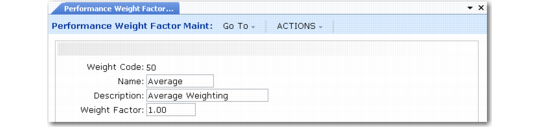
Performance Weight Factor Maintenance (5.15.7)
Weight factors are optional measurements, but can be an important part of the performance measurement system. The weight factors you create will vary depending on your manufacturing environment.
Example: A supplier provides you with uncommonly poor-quality goods. The associated Poor Quality event code is worth 1 point. However, you apply the Extremely Poor weight factor, which has a value of 3.00. The system calculates the new weighted performance event score as 3 (1 x 3.00). The weighted performance event score displays on the supplier’s report card.
Use Performance Weight Factor Browse (5.15.8) to view the weight factors created using this program.