Overview of Service Types
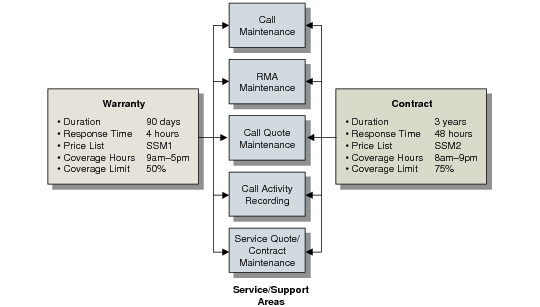
Service types define the rules that determine what service activities can take place for covered items and who pays for them. There are two categories of service types:
• Warranty Type Maintenance (11.3.15) sets up warranty types, which you attach to items in the installed base.
• Contract Type Maintenance (11.5.10) sets up contract types, which you use during the creation of contracts.
The service type—warranty or contract—defines defaults such as hours of coverage, levels of service, and under- and over-limit charge codes. Typically, service organizations do not provide warranty or contract coverage for every item. For items not covered by either, the system obtains a default coverage type from control program settings.
Both a warranty and contract can be active at the same time, although it is more common for contracts to become effective when warranties expires.
The agreements represented by service types and contracts determine much of what happens in call management. The service type also affects returned material authorizations (RMAs). These functions retrieve a service type from one of the following:
• The warranty code attached to an installed base record
• A contract that includes the item being serviced or a blanket contract
• A default service type in a control program
See
Service Contracts for details on how contract types apply to the creation of individual contracts.
Impact of Service Types