Implementing TMS
Planning is required before you begin a TMS implementation. Important questions to answer include:
• What locations do you ship from?
• Where do you ship to?
• What carriers and services do you use?
• What payment methods do you use?
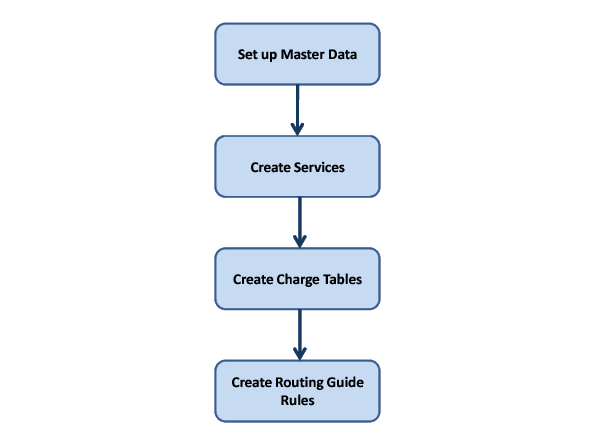
When you implement TMS, follow four fundamental steps:
• Set up master data. For example, you need Packing Locations, Internal IDs, carriers, charges, zones, and other system data.
• Create Carrier Services. Based on the different services offered by the carrier, create the appropriate services. These services can subsequently be associated with rate structures.
• Create Charge Tables. Charge Tables are rate structures supplied by your carriers. The Charge Tables detail the rates for shipping goods between prescribed carrier zones. The Charge Tables contain details of the rate basis, the charge for each zone combination, and the charges for other services (known as accessorials) that the carrier provides. You can manually create Charge Tables or upload them from Excel or CSV files.
• Create Routing Guide rules. To make a Carrier Service available to be assigned to a shipment, set up Routing Guide rules. The Routing Guide specifies rules that enable PRECISION to return only those Carrier Services that meet the rule criteria.
TMS Implementation Steps
Note: TMS Implementation Steps does not include configuring shipment structure. It is also important to set up your Web UI shipment screens to include the fields you need.