The food and beverage industry is an ever-fluctuating landscape with a constant demand for operational efficiency. The key to navigating this challenging environment is robust Integrated Business Planning (IBP). Leveraging our collective experience of over 70 years, my colleague Charlie Marge and I have been guiding businesses through the maze of Sales and Operations Planning (S&OP) and IBP. Our proficiency extends across several critical areas including demand planning, distribution planning, production planning and scheduling, and procurement planning.
In the high-speed business environment of today, the need for precise demand forecasting and effective supply chain management is paramount. This is especially critical in industries like food and beverage, marked by short product shelf lives and significantly varying demand. To mitigate these challenges, businesses must adopt a holistic forecasting approach that combines bottom-up and top-down perspectives. This entails a thorough analysis of historical data, taking into account product life cycles, and adjusting for outliers or one-off events. Additionally, it necessitates the calculation of appropriate safety stock levels to shield against supply chain unpredictability.
Implementing Integrated Business Planning in the Food and Beverage Industry
The food and beverage industry today faces numerous challenges. From changing consumer behaviors and expanding value chains to capacity challenges and quality requirements, manufacturers are constantly under pressure to adapt and innovate.
One of the key challenges is the lack of visibility across the supply chain. This lack of transparency can lead to disruptions, affecting customer service and ultimately, the bottom line. To overcome these challenges, businesses need to adopt a new mindset — one that integrates operational and financial views. Over the past 30 years or so, the industry has been focused on S&OP as the process to break down the silos between the departments in the organization. While S&OP has worked and still does, organizations have realized that to truly accomplish not just breaking down the silos but to realistically plan the supply chain efficiently two pieces need to be added to the process. First, the entire ecosystem needs to be considered which means internal and external partners such as suppliers and customers. Second, the addition of financial metrics into the process which now gives us IBP.
Integrated Business Planning offers a solution to these challenges. By merging operational metrics with financial metrics, businesses gain a holistic view of their operations. This allows them to make informed decisions that not only meet operational objectives but also align with financial goals. For instance, before taking on a new promotion or adding a new product, businesses can evaluate the financial impact of these decisions. This ensures that they are not only operationally feasible but also financially viable.
However, adopting IBP is not just about merging metrics. It requires a fundamental shift in the way businesses operate. It’s about breaking down silos and fostering cross-functional decision-making. It’s also about extending this collaborative approach beyond the company walls and across the entire supply chain. This includes your suppliers, your customers, and even their customers. By doing so, businesses can gain a comprehensive understanding of the supply chain, enabling them to make better decisions and achieve better results. Essentially, it is Ecosystem Business Planning.
Aligning Demand and Supply Planning
Understanding demand is only half the battle. Many businesses struggle with the supply planning side of the equation. It’s not enough to look at overall plant capacity. Businesses need to consider capacity at the production line level, multiple levels of manufacturing, and potential constraints such as key raw materials or labor availability. When demand exceeds supply, businesses need to prioritize certain items or customers and optimize plant throughput. Again, the entire network (ecosystem) needs to be considered such as the potential of adding co-packers (contract manufacturers) to handle demand spikes.
To illustrate this, consider a hypothetical scenario where a business has an opportunity to sell an additional $200,000 in a particular product family. To meet this demand, the business could either run overtime at one plant or allow a second plant or co-packer (if a single plant business) to help out. Each option has different implications in terms of costs, margins, and capacity utilization. By running various scenarios and analyzing the operational and financial implications of each, the business can make an informed decision about how to proceed.
Moreover, businesses can significantly enhance their management of demand and supply by integrating operational and financial metrics via a robust sales and operations planning process. This detailed, data-driven approach enhances decision making, boosts profitability and ensures high service levels.
However, achieving success in these spheres necessitates the elimination of silos and the involvement of all relevant stakeholders. It also requires fostering internal and external collaboration.
The Tangible Benefits of Integrated Business Planning
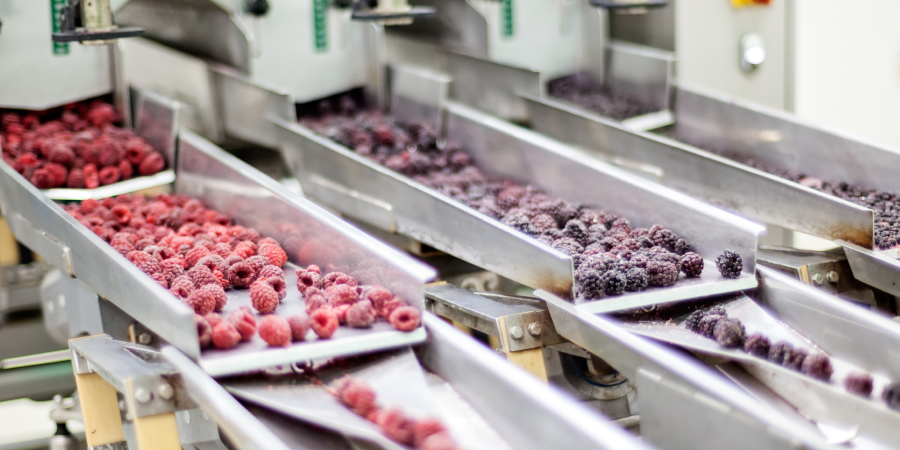
Integrated Business Planning has proven successful for many businesses. For example, a frozen foods customer was able to increase their forecast accuracy by 17%, improve their customer service levels from mid-80s to 95%, reduce their inventory carrying costs by $500,000, and decrease their obsolete inventory by 20%. Similarly, a fresh food business was able to achieve more reliable forecasts, improve efficiency and maintain high customer service levels.
Armed with the right approach and tools, businesses can successfully navigate the complexities of demand and supply planning and ultimately, achieve their business objectives.
If you want to know more about this topic, download and watch our S&OP/IBP webinar on demand.