Data Collection
This chapter describes data collection activities used for both family and end-item planning.
Introduction to Data CollectionExplains the purpose of data collection and describes how to load data.
Loading Data from Other SitesIllustrates how to load data from other sites and maintain it.
Loading Data from Non-QAD DatabasesDescribes how data from various non-QAD sources is loaded.
Maintaining Loaded DataDescribes how to maintain and change different types of data.
Introduction to Data Collection
Operations planning consolidates and transforms transaction information from all company sites into a central repository. Family plans and operations plans use sales forecast and on-hand inventory quantities. Performance measurement reporting also uses actual production and purchase order receipt quantities.
Before you can calculate plans or print reports, you must load this information into the Enterprise Operations Plan module of the central planning site. The load generates records that summarize the original item numbers, quantities, and transaction effective dates at the time of the load.
Operations Data to Be Loaded
|
To Generate
|
Collect
|
|
Family plans
|
Sales forecasts (only for family plans based on end-item sales forecasts)
Beginning inventory balances
|
|
Operations plans
|
Sales forecasts
Beginning inventory balances (only for multilevel operations plans)
MRP gross requirements
|
|
Performance reports
|
Actual sales shipments
End-item inventory balances
Completed work orders
Completed repetitive schedules
Purchase order receipts
|
In many respects, Operations Plan is a separate environment from other modules. Changes you record in Operations Plan do not update original sales forecasts, inventory balances, or other data. Also, changes you record in other modules do not update previously loaded quantities (unless you reload). This approach gives you a secure central planning environment.
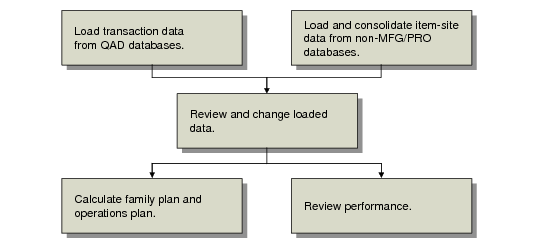
Data Collection Work Flow summarizes the data collection work flow.
Data Collection Work Flow