
Manufacturers today are under increasing pressure to modernize operations while continuing to execute at speed. As manufacturers prepare for the next generation of AI-driven and agentic AI applications in manufacturing, many are recognizing the need for a modern ERP foundation capable of supporting real-time execution and trusted data.
Driving Measurable Value at Automotive Scale
For automotive manufacturers running legacy ERP environments such as SAP ECC, the challenge is especially urgent. Many organizations are navigating fragmented systems, disconnected workflows and increasing technical debt while trying to maintain uninterrupted production and customer delivery.
Tenneco, a global Tier 1 automotive manufacturer, recognized that modernization required more than a technical upgrade. The company needed a manufacturing ERP platform capable of standardizing execution, improving visibility and supporting global operations without disrupting live production.
By implementing QAD Adaptive, Tenneco modernized its automotive ERP environment and established a scalable, cloud-native foundation designed for manufacturing execution at global scale.
Fragmented ERP Systems Limited Operational Execution
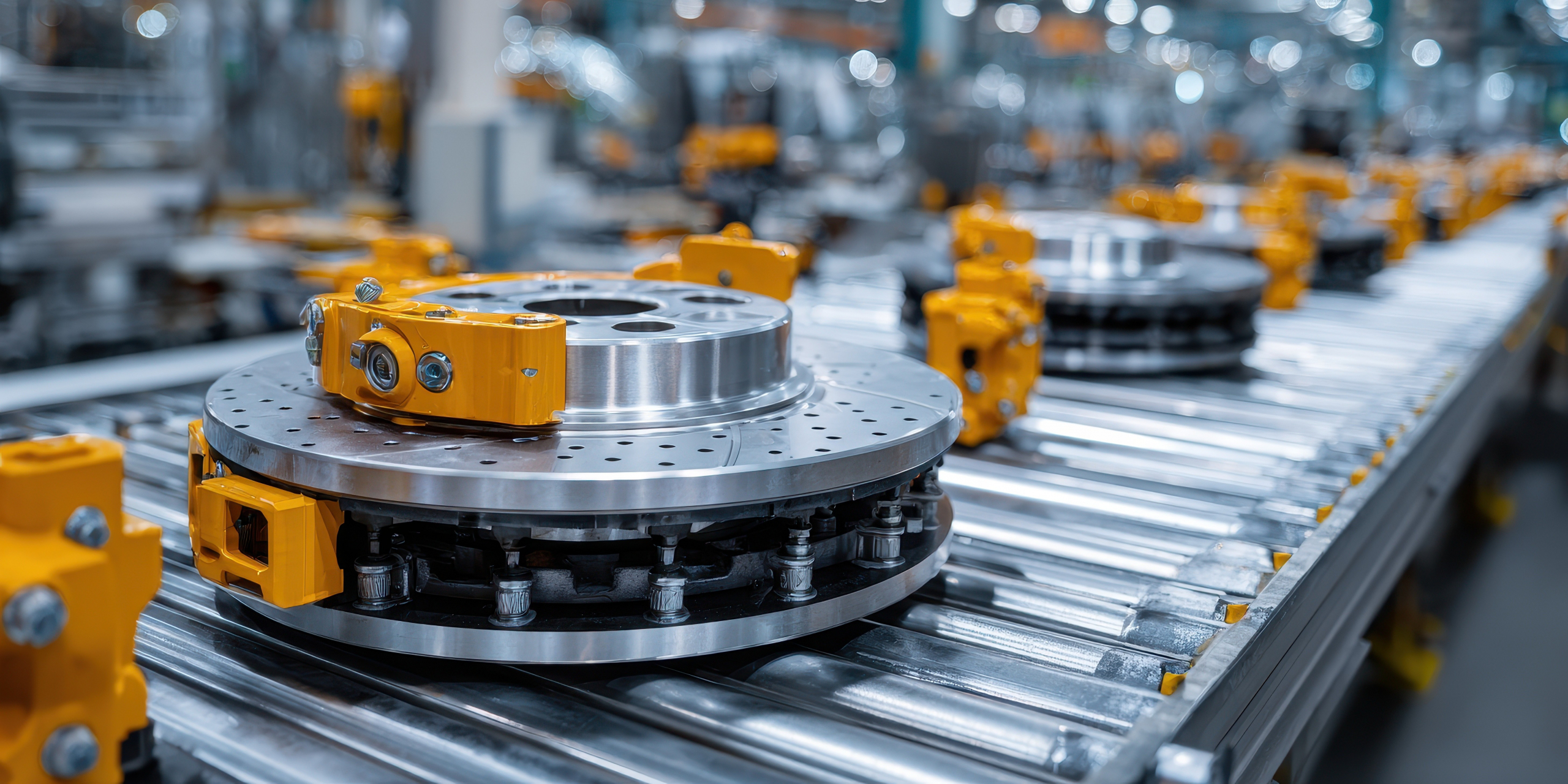
Tenneco supplies critical automotive components across light vehicle, commercial truck and industrial markets, operating more than 100 manufacturing locations globally. Within the company’s Braking division, ERP systems had evolved over time through acquisitions, regional requirements and independent business units.
Some sites operated on legacy SAP environments while others used older QAD systems. Over time, this created fragmentation across systems, workflows and data definitions.
“We had to disentangle complexity,” said Jo-Anne Evans, Executive Director of IT for Tenneco’s Braking Division. “Modernization for us was not about lifting and shifting. It was about simplifying and standardizing how we operate.”
Like many manufacturers running SAP ECC, Tenneco faced increasing operational complexity driven by disconnected systems and manual processes. Critical workflows were frequently managed outside the ERP environment through spreadsheets and adjacent tools, limiting standardization and slowing decision-making.
“The problem wasn’t that we didn’t have data,” said Jonathon Brown, Divisional CIO, Performance Solutions at Tenneco. “It was that we couldn’t trust it quickly enough to act.”
The company needed a manufacturing ERP software solution capable of:
- Replacing legacy ERP environments
- Standardizing operations across plants
- Reducing spreadsheet dependency
- Improving manufacturing inventory management
- Supporting real-time execution at scale
- Delivering change without disrupting production
QAD Adaptive Creates a Unified Manufacturing ERP Foundation
After evaluating enterprise platforms, Tenneco selected QAD Adaptive to modernize and standardize its manufacturing ERP environment across the Braking division. The goal was not simply to replace legacy systems of record, but to establish a true system of action capable of supporting real-time manufacturing execution, inventory visibility, operational intelligence and future AI-driven innovation at global scale.
Rather than recreating legacy processes in the cloud, Tenneco implemented a standardized QAD Adaptive core model designed specifically for manufacturing operations. Delivered on Amazon Web Services (AWS), QAD Adaptive unified manufacturing, supply chain, financials and ERP inventory management within a single cloud-native architecture.
Tenneco partnered with Arista Consulting, part of the QAD Partner Network, alongside QAD Professional Services to execute the multi-site transformation across its global Braking division. The initiative prioritized standardization over customization, aligning sites to a unified operating model while maintaining uninterrupted production throughout the rollout.
The implementation included:
- Advanced warehouse management and traceability
- Standardized chart of accounts across sites
- Refreshed master data
- Harmonized financial structures
- Embedded MRP capabilities
- Elimination of more than 500 legacy customizations
“QAD Adaptive gives us a platform our operations team can actually live in,” Brown said. “If people trust the system and it’s easy to use, they’ll stay in it. That’s how you get consistency, better data and better decisions.”
To support workforce adoption, Tenneco also implemented QAD Digital Learning, providing embedded, role-based guidance directly within the application to accelerate onboarding and improve user confidence.
Tenneco Achieves Measurable Operational Improvements
Despite the scale of the transformation, Tenneco achieved zero missed production days and zero missed customer shipments during go-live. On day one, sites continued shipping, invoicing and producing at automotive scale.
The implementation delivered measurable operational improvements across manufacturing execution, inventory synchronization and labor productivity. Within the first post-go-live measurement period, Tenneco targeted:
- 9% reduction in scrap through improved traceability and synchronization
- 1.5% improvement in direct labor productivity
- $3.36 million inventory synchronization benefit
The modernization also significantly expanded ERP process utilization. Legacy environments had been leveraging roughly half of available ERP capability. Under the QAD Adaptive model, process coverage increased to approximately 93%.
By embedding warehouse management, traceability and MRP directly within the ERP environment, Tenneco improved inventory visibility, reduced manual reconciliation and strengthened operational consistency across sites.
The consolidation of workflows and trusted data within a unified environment also established a stronger digital foundation for future AI and automation initiatives.
A Scalable Automotive ERP Model Designed for Growth
Today, Tenneco operates on a standardized manufacturing ERP foundation designed to support execution, scalability, real-time decision-making and future AI-driven innovation across global operations.
“QAD Adaptive gives us a single model for how we want to operate,” Evans said. “That consistency allows us to move faster as we expand, without recreating processes site by site.”
The company’s QAD Adaptive core model now serves as the blueprint for future deployments across the enterprise, enabling repeatability without reengineering processes at every location.
For manufacturers evaluating how to modernize legacy SAP ECC environments and prepare for agentic AI ERP initiatives, Tenneco’s transformation demonstrates how a purpose-built manufacturing ERP platform can help reduce complexity, improve operational visibility and deliver measurable value while maintaining uninterrupted production.
Evaluating ERP Modernization Options?
Modernization decisions carry significant operational and financial implications for companies running legacy ERP environments. Evaluating implementation timelines, project risk, operational disruption and time to value has become increasingly important as manufacturers plan their next phase of growth.
Download our Executive Decision Checklist to explore key considerations for ERP modernization and manufacturing transformation.


Valuable insights! Modernizing legacy ERP systems is essential for manufacturers looking to improve agility, enhance visibility, and prepare for the next generation of AI-powered operations.